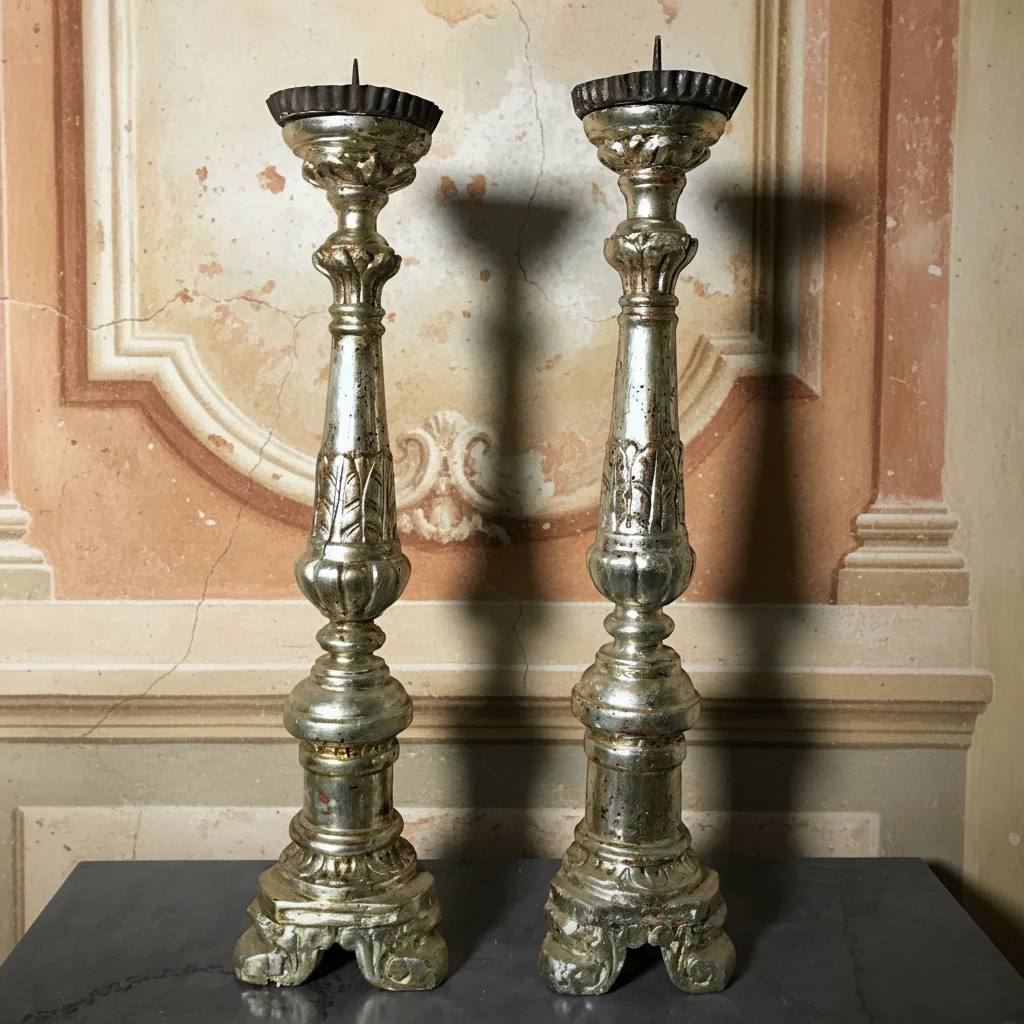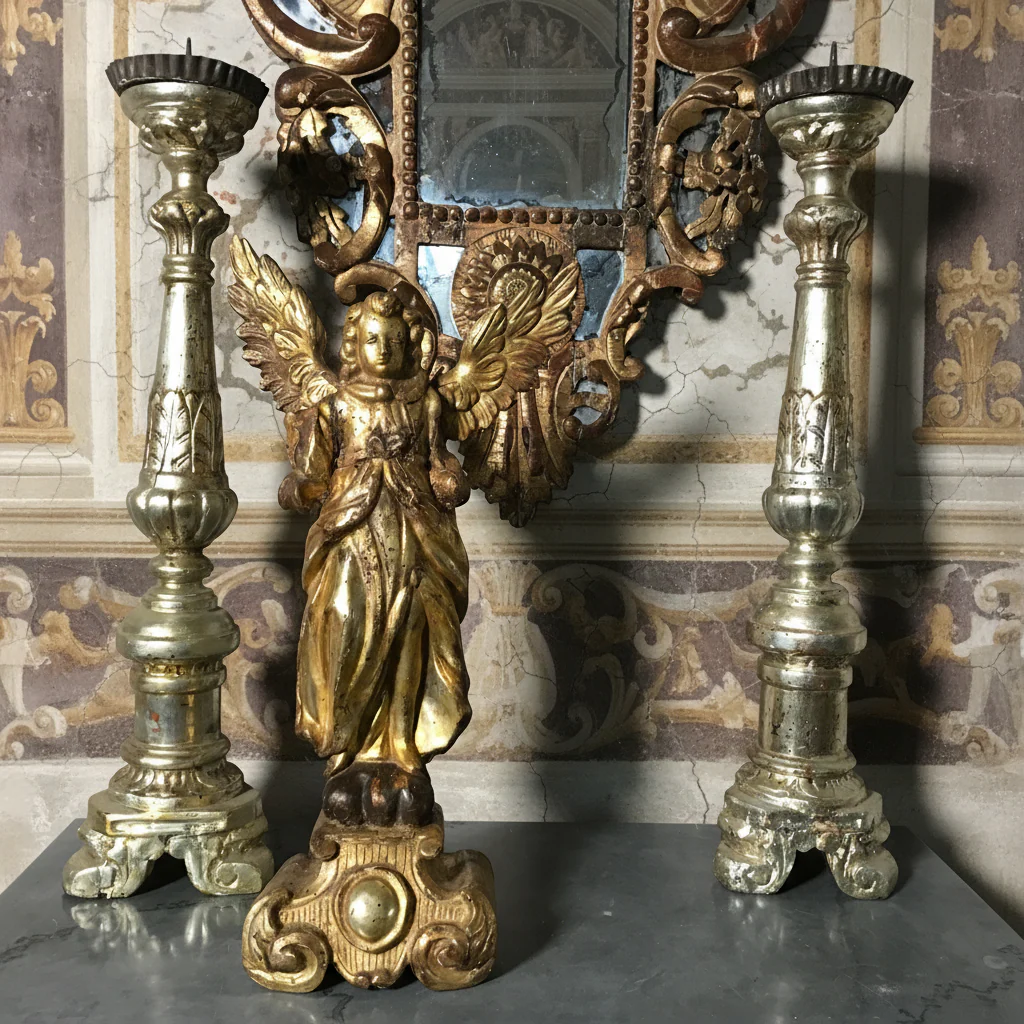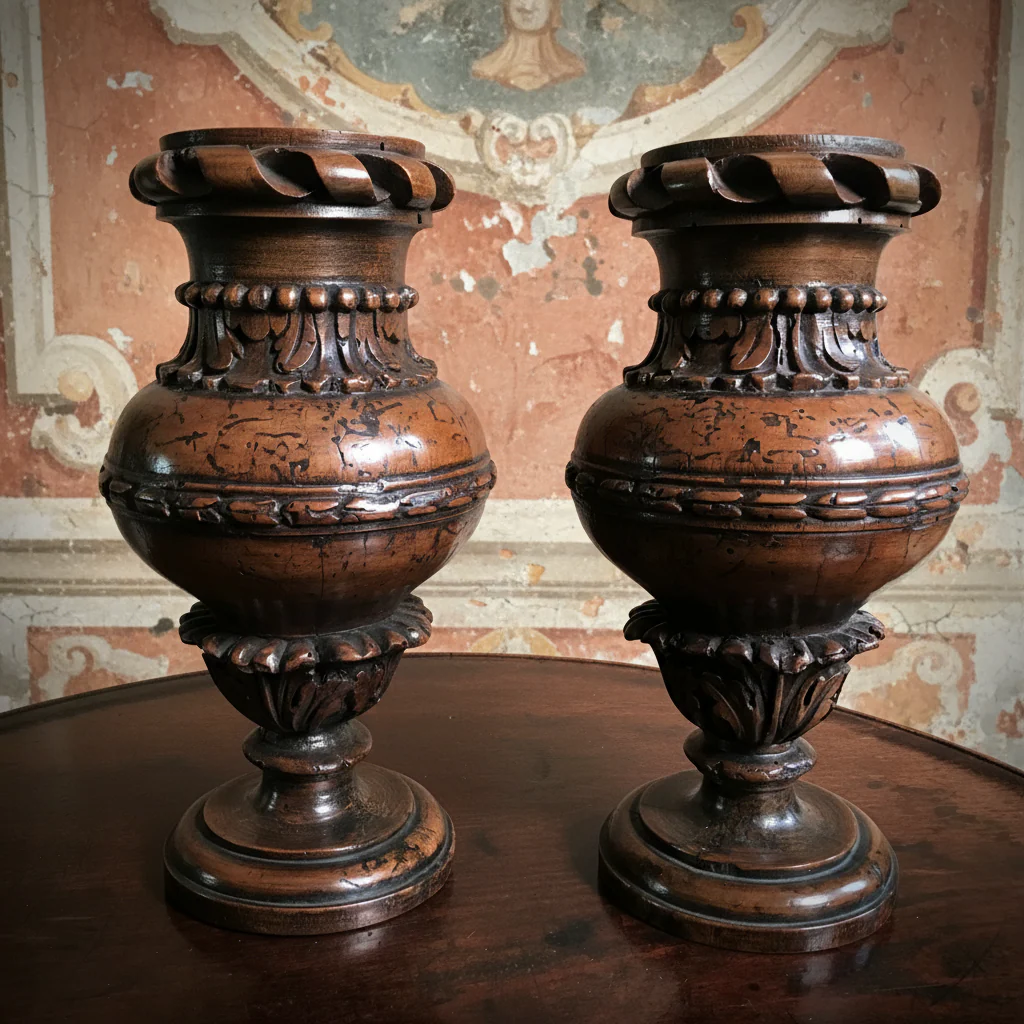
A Pair of Italian Renaissance Turned and Carved Walnut Altar Vases Lombardy or Emilia c.1570–1600
A Pair of Italian Renaissance Turned and Carved Walnut Altar Vases Lombardy or Emilia c.1570–1600
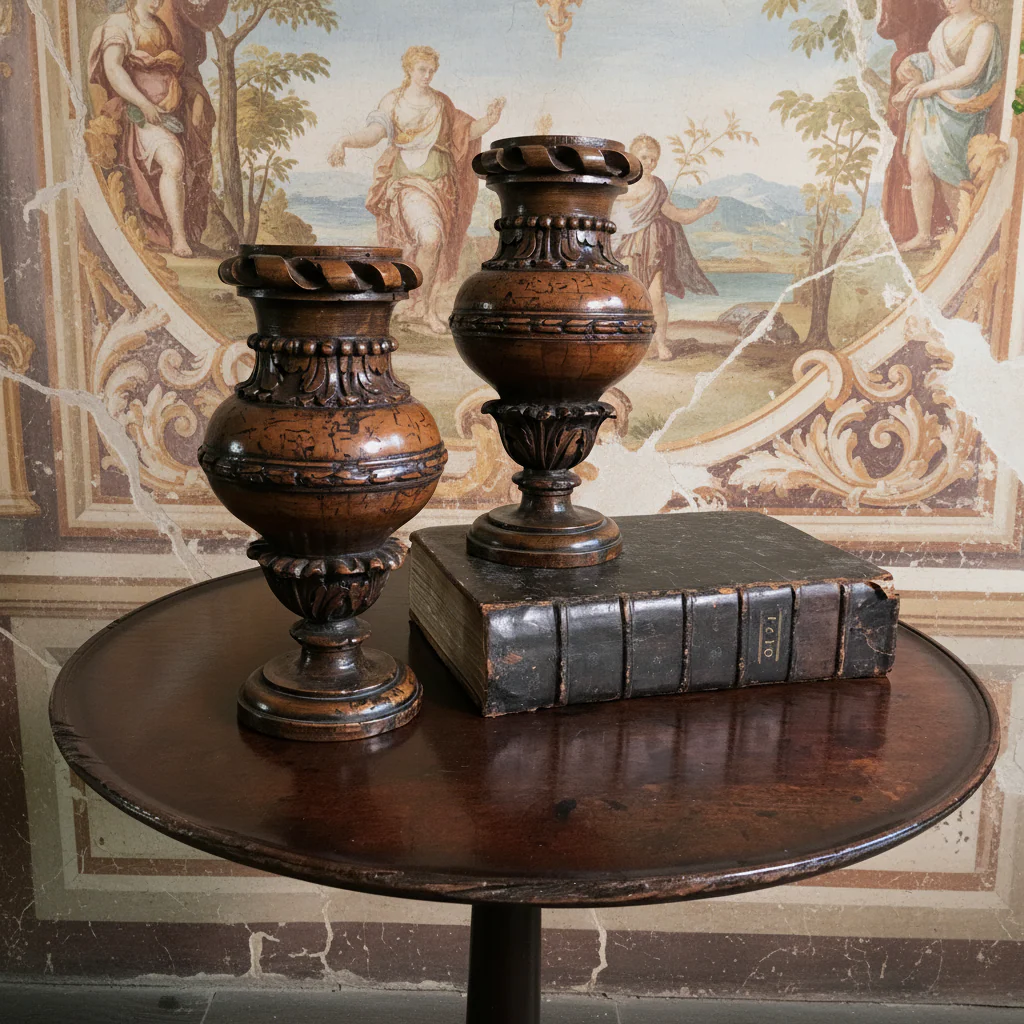
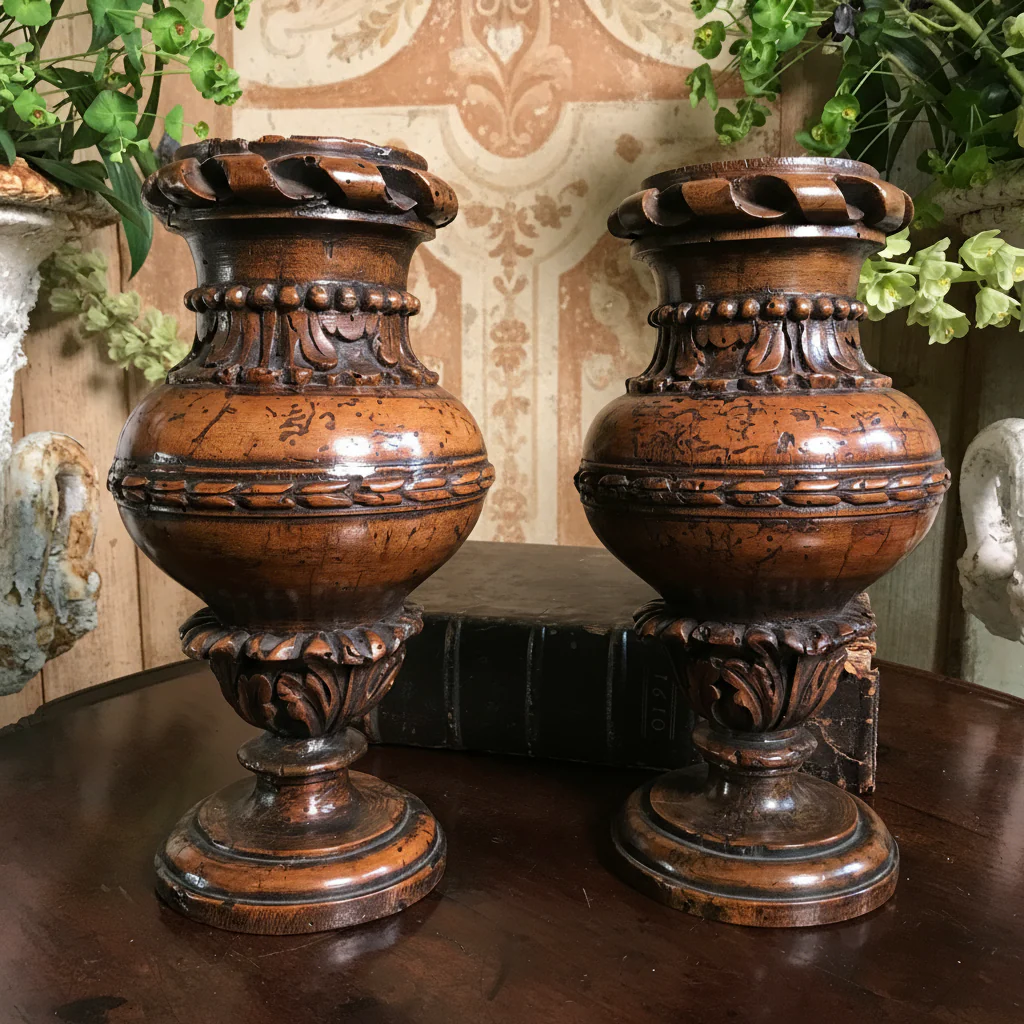
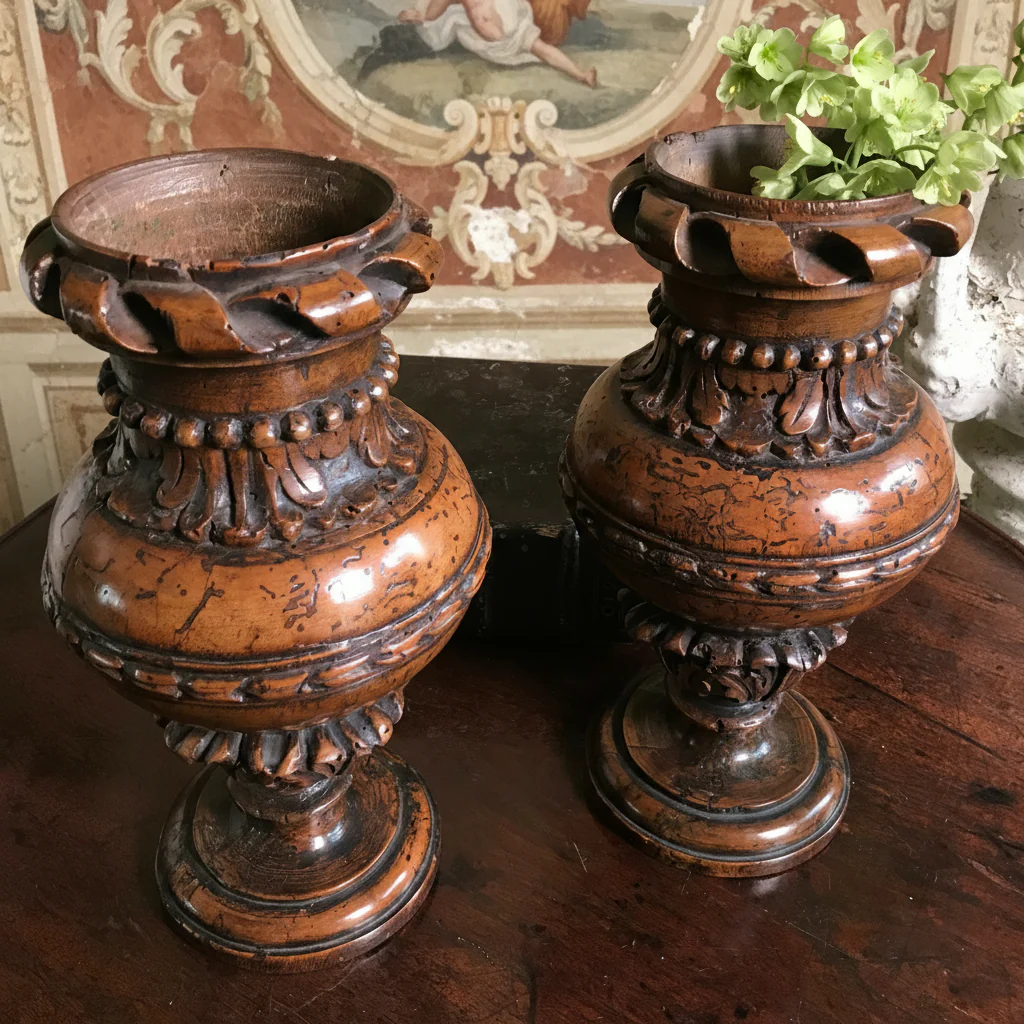
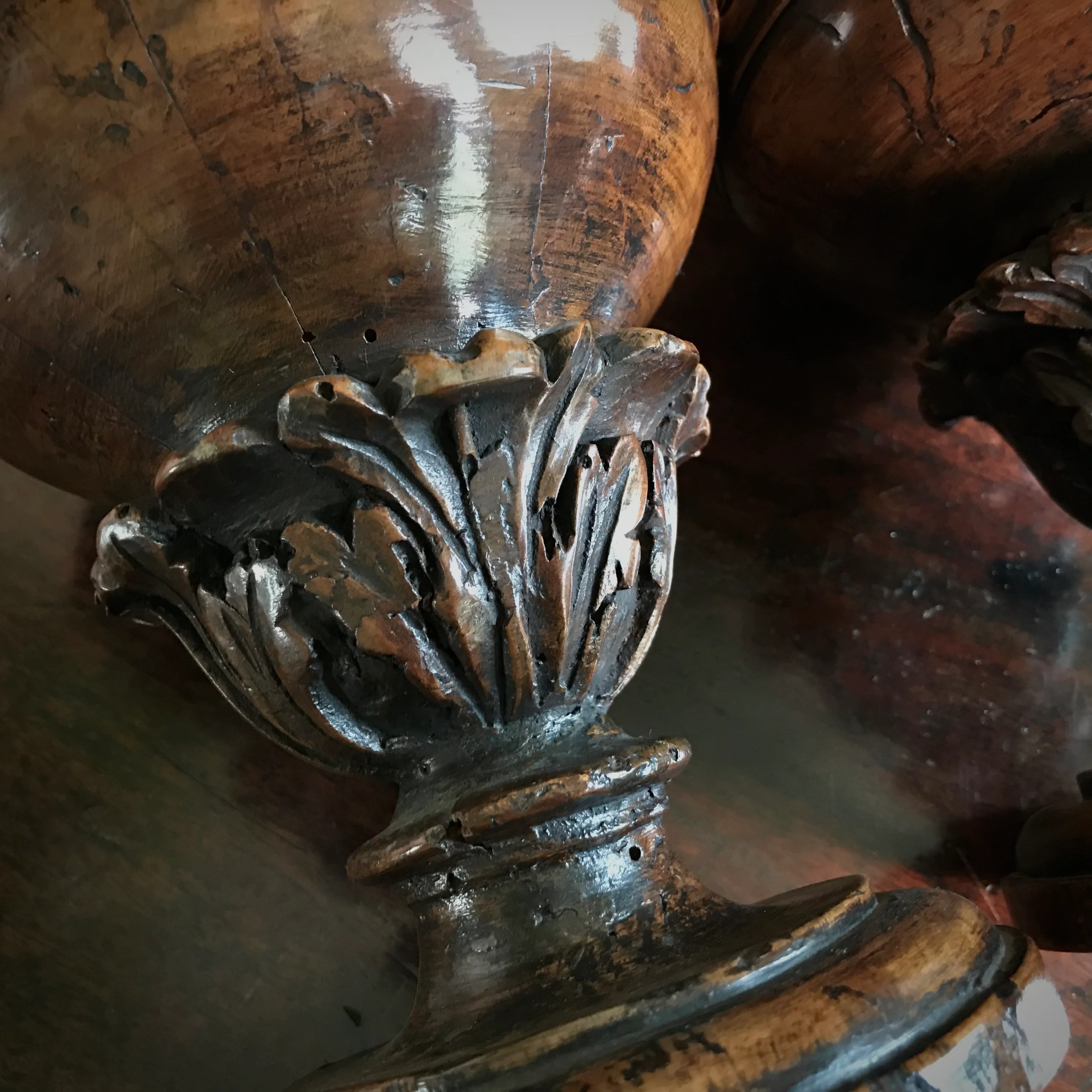
Turned from solid walnut and finely carved with bold acanthus leaves, beadwork, and leafy interlace, each vase demonstrates the masterful dialogue between turning and carving that characterises Northern Italian craftsmanship.
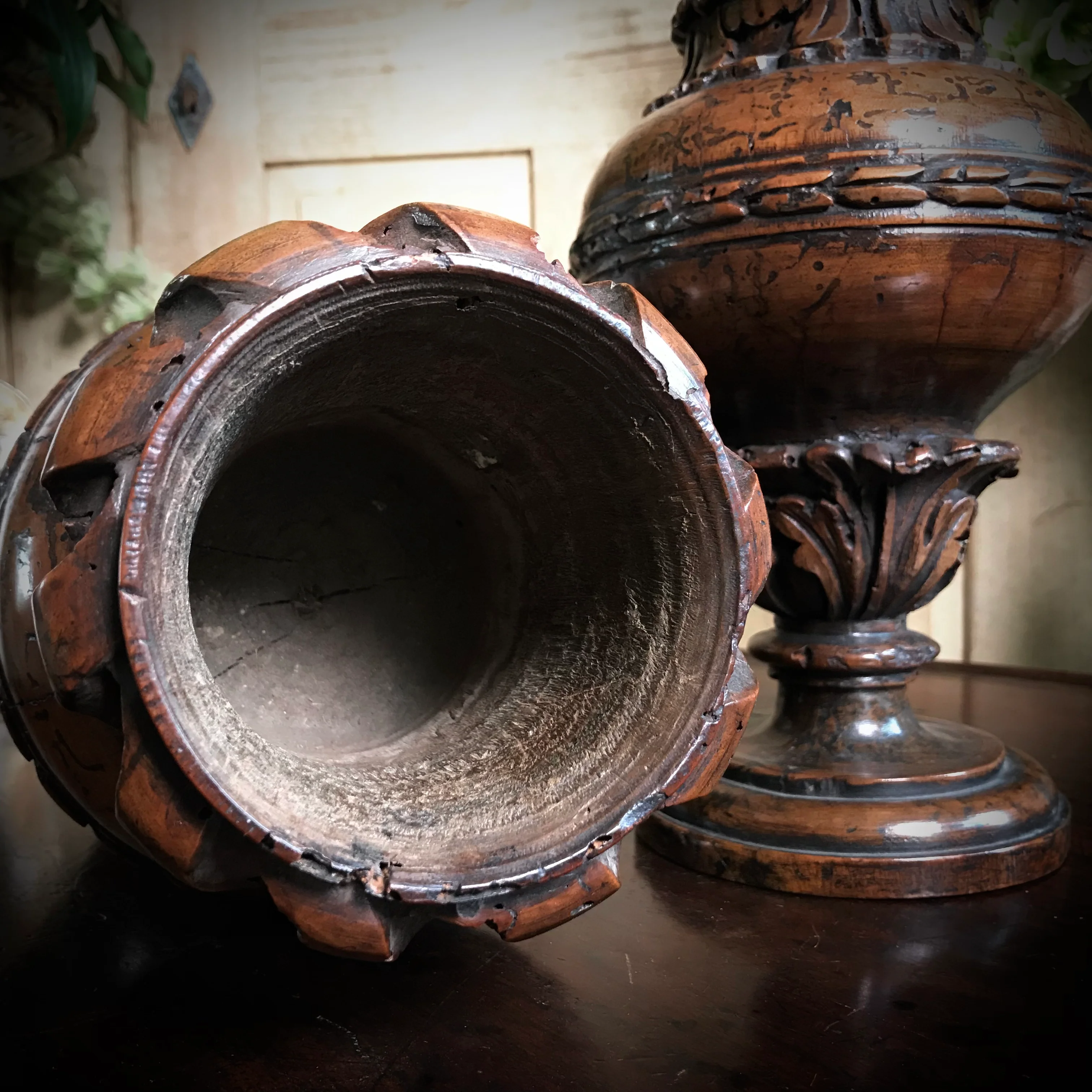
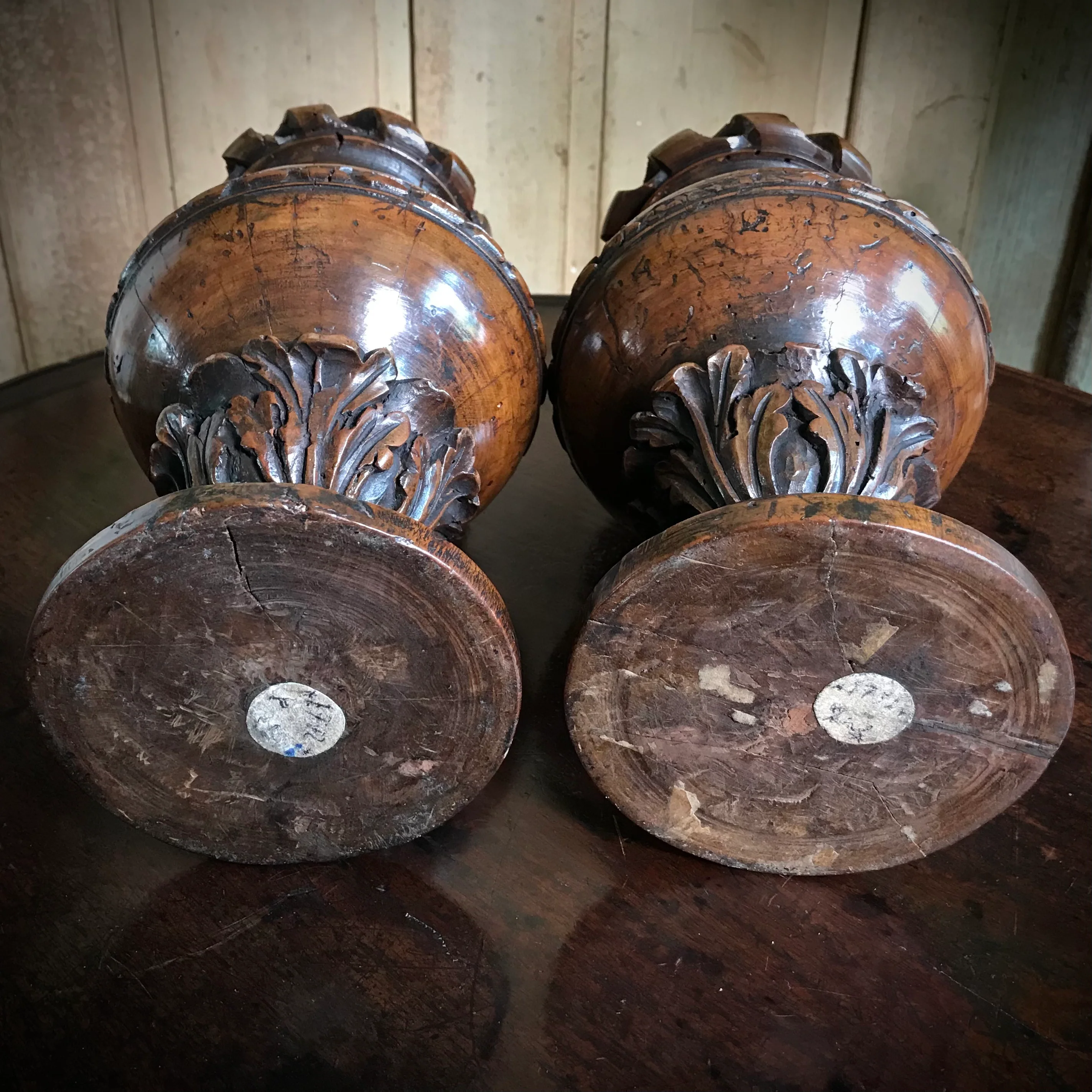
The hollow interiors show tool marks from hand-gouging, while the undersides retain early museum inventory labels attesting to their long-documented history.
The rich, honeyed patina and crisp carving speak to centuries of devotional use and careful preservation.
Such altar vases, known as vasi d’altare, were designed to flank crucifixes or reliquaries within private chapels or sacristies.
A rare survival of Italian Renaissance ecclesiastical woodwork.
More Images
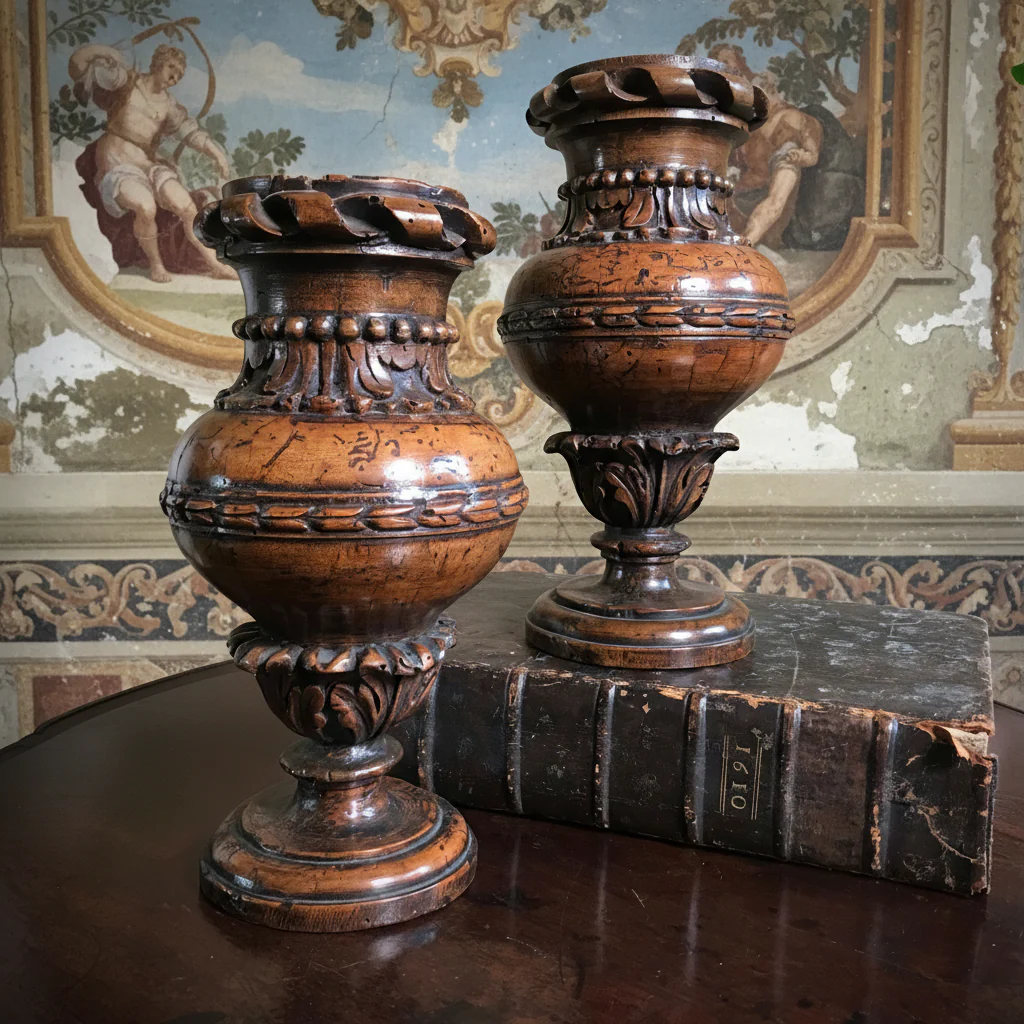
A Pair of Italian Renaissance Turned and Carved Walnut Altar Vases Lombardy or Emilia c.1570–1600
Turned from solid walnut and finely carved with bold acanthus leaves, beadwork, and leafy interlace, each vase demonstrates the masterful dialogue between turning and carving that characterises Northern Italian craftsmanship.
The hollow interiors show tool marks from hand-gouging, while the undersides retain early museum inventory labels attesting to their long-documented history.
The rich, honeyed patina and crisp carving speak to centuries of devotional use and careful preservation.
Such altar vases, known as vasi d’altare, were designed to flank crucifixes or reliquaries within private chapels or sacristies.
A rare survival of Italian Renaissance ecclesiastical woodwork.
Product Information
Product Information
Shipping & Returns
Shipping & Returns
Description
Turned from solid walnut and finely carved with bold acanthus leaves, beadwork, and leafy interlace, each vase demonstrates the masterful dialogue between turning and carving that characterises Northern Italian craftsmanship.
The hollow interiors show tool marks from hand-gouging, while the undersides retain early museum inventory labels attesting to their long-documented history.
The rich, honeyed patina and crisp carving speak to centuries of devotional use and careful preservation.
Such altar vases, known as vasi d’altare, were designed to flank crucifixes or reliquaries within private chapels or sacristies.
A rare survival of Italian Renaissance ecclesiastical woodwork.