An Early English Turned Applewood Dairy Bowl, Late 17th or earlier
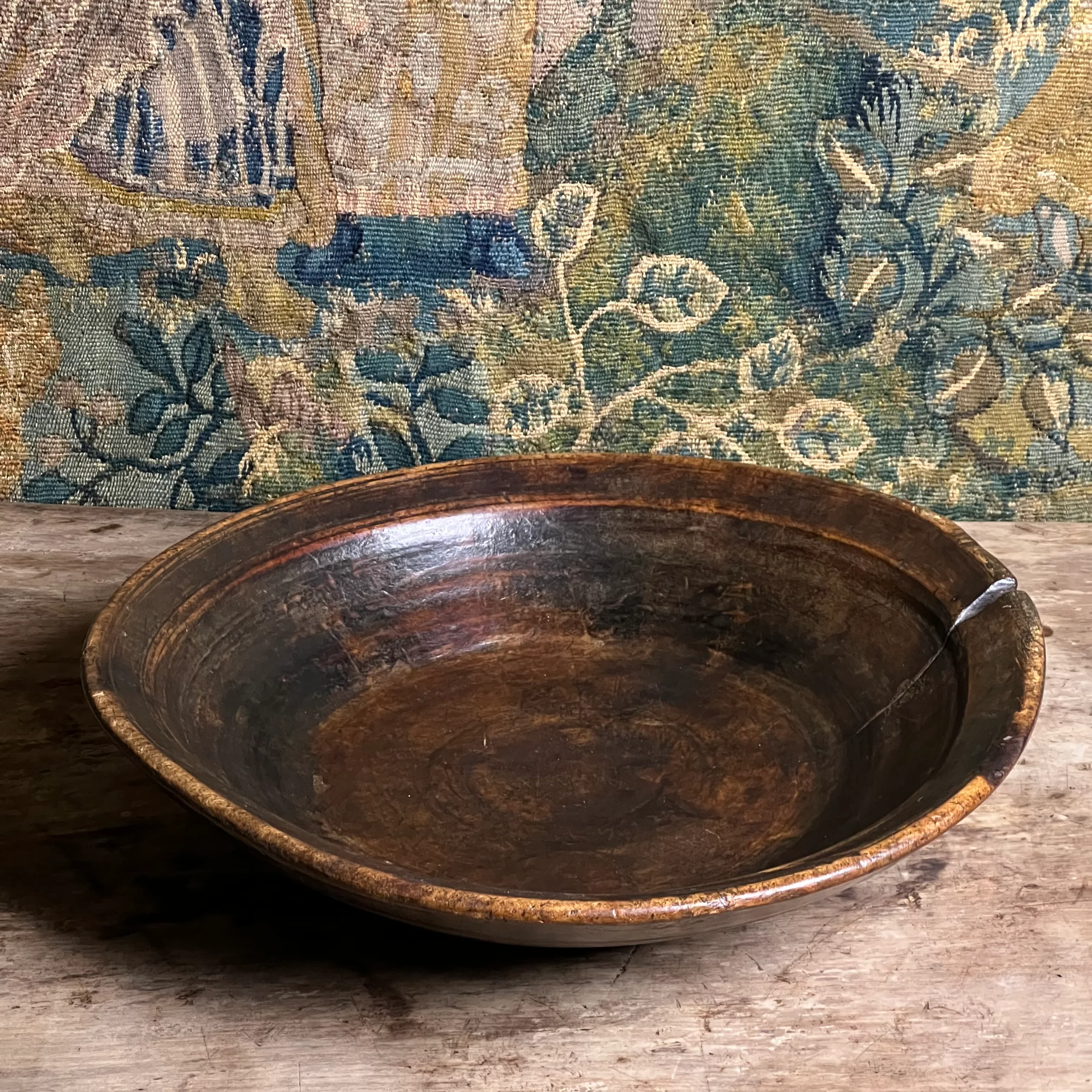
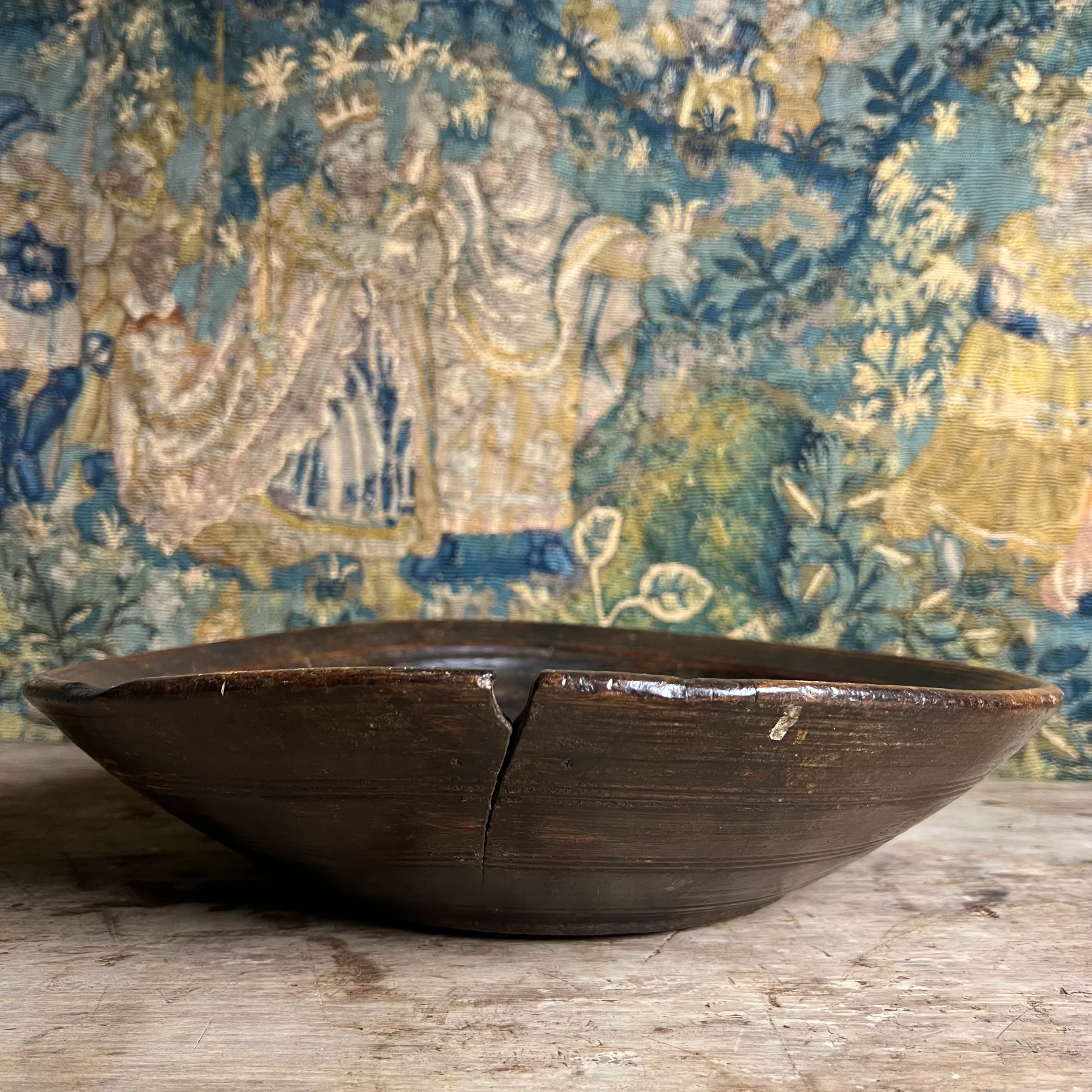
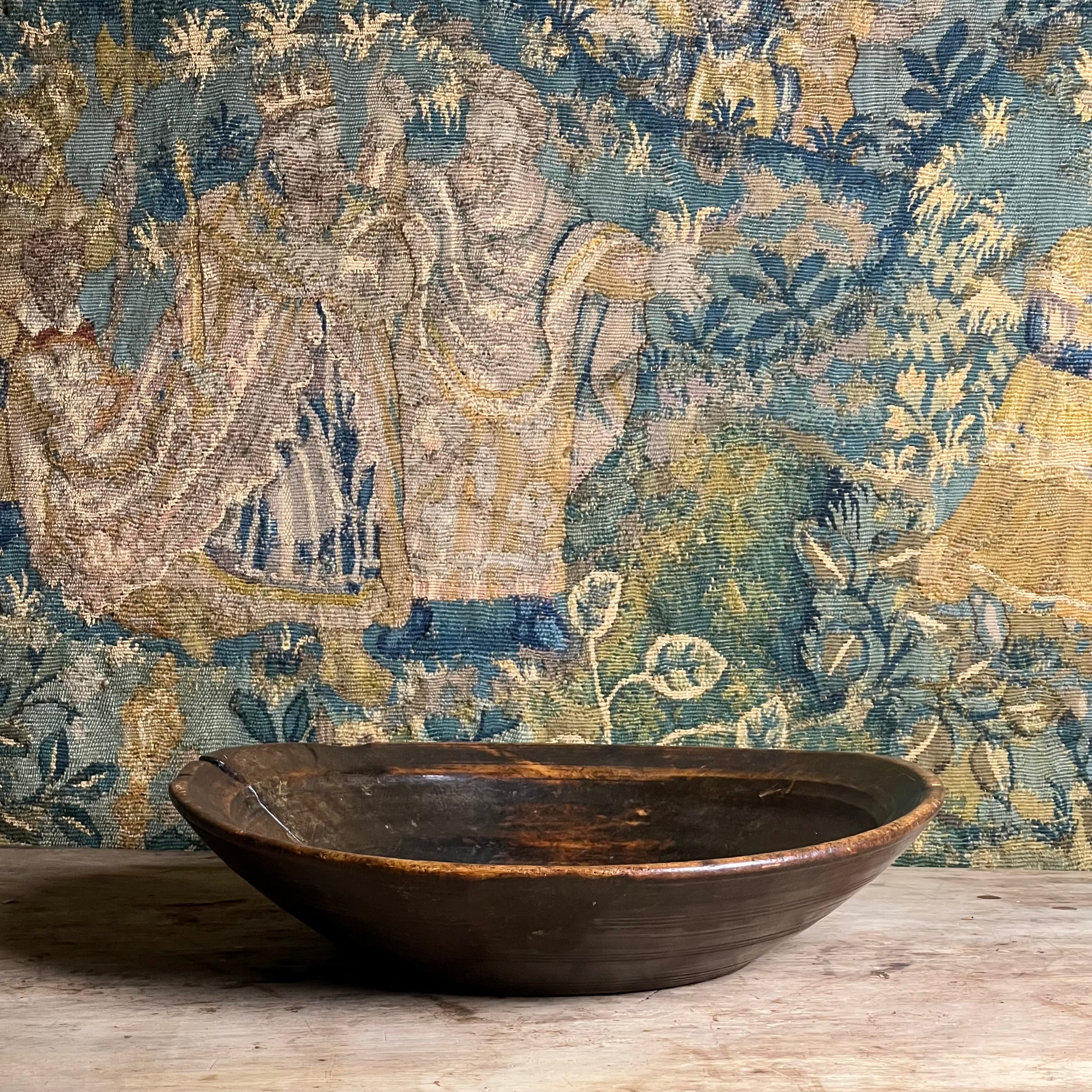
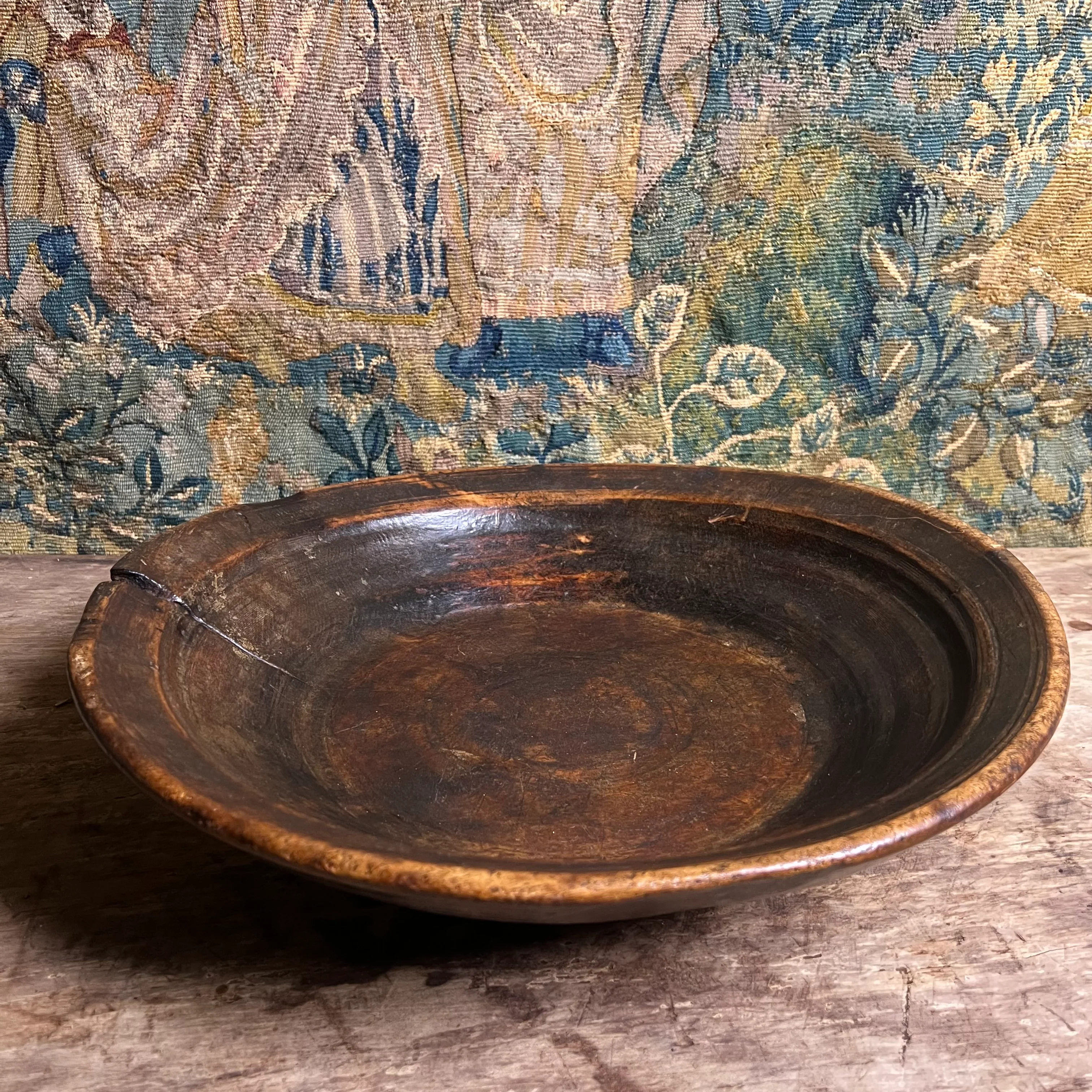
A early, humble and perfectly patinated bowl, hand-turned from dense applewood in the late 17th Century or earlier.
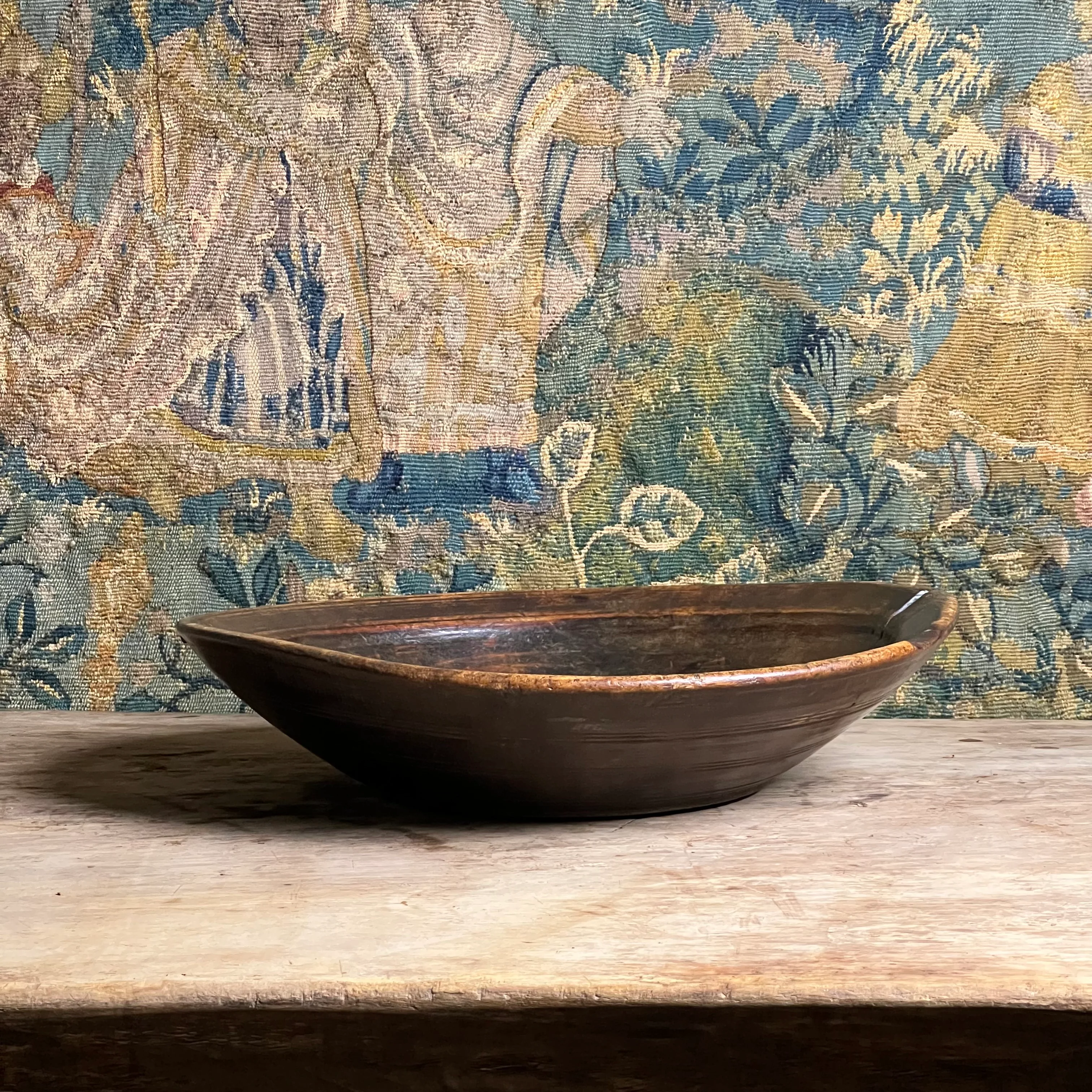
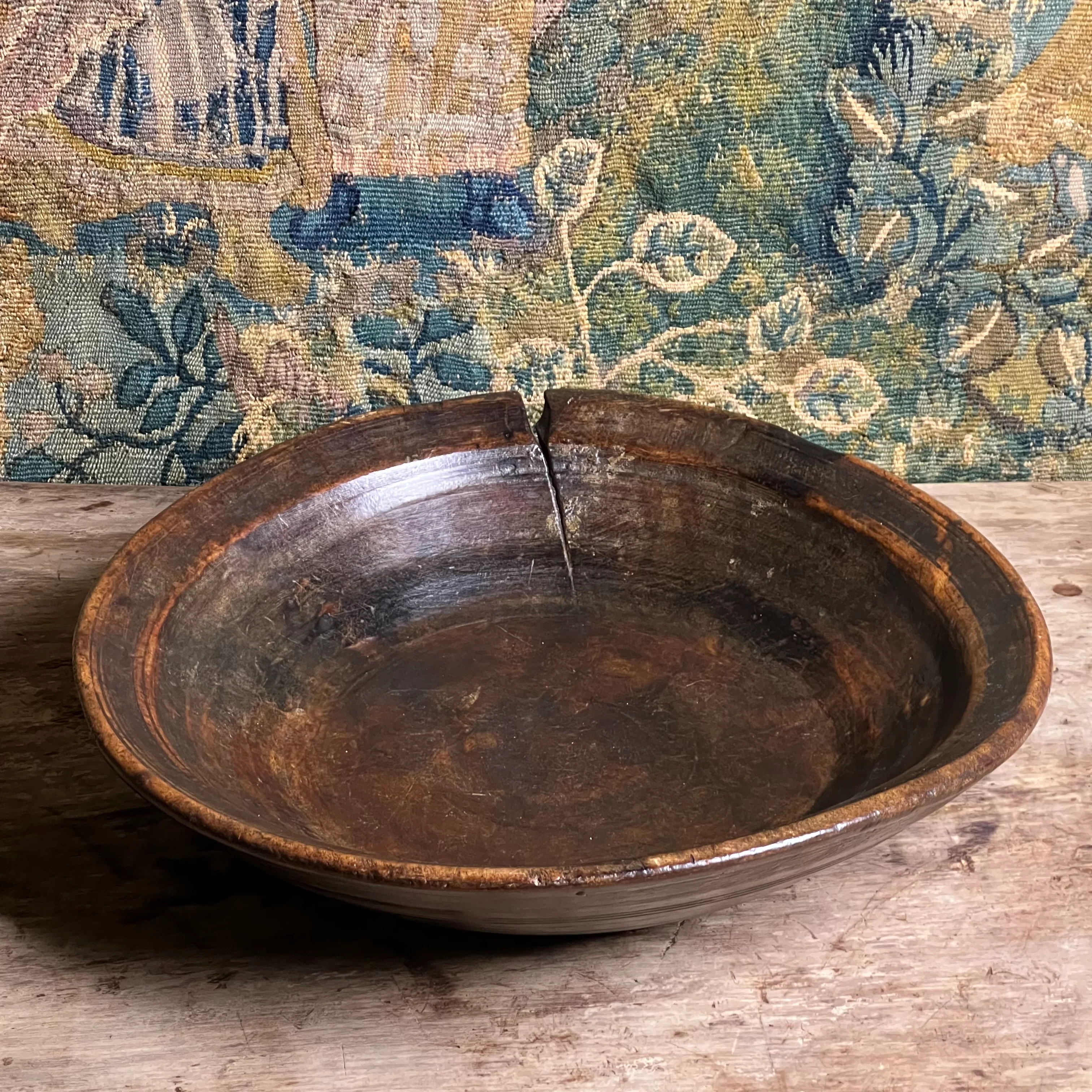
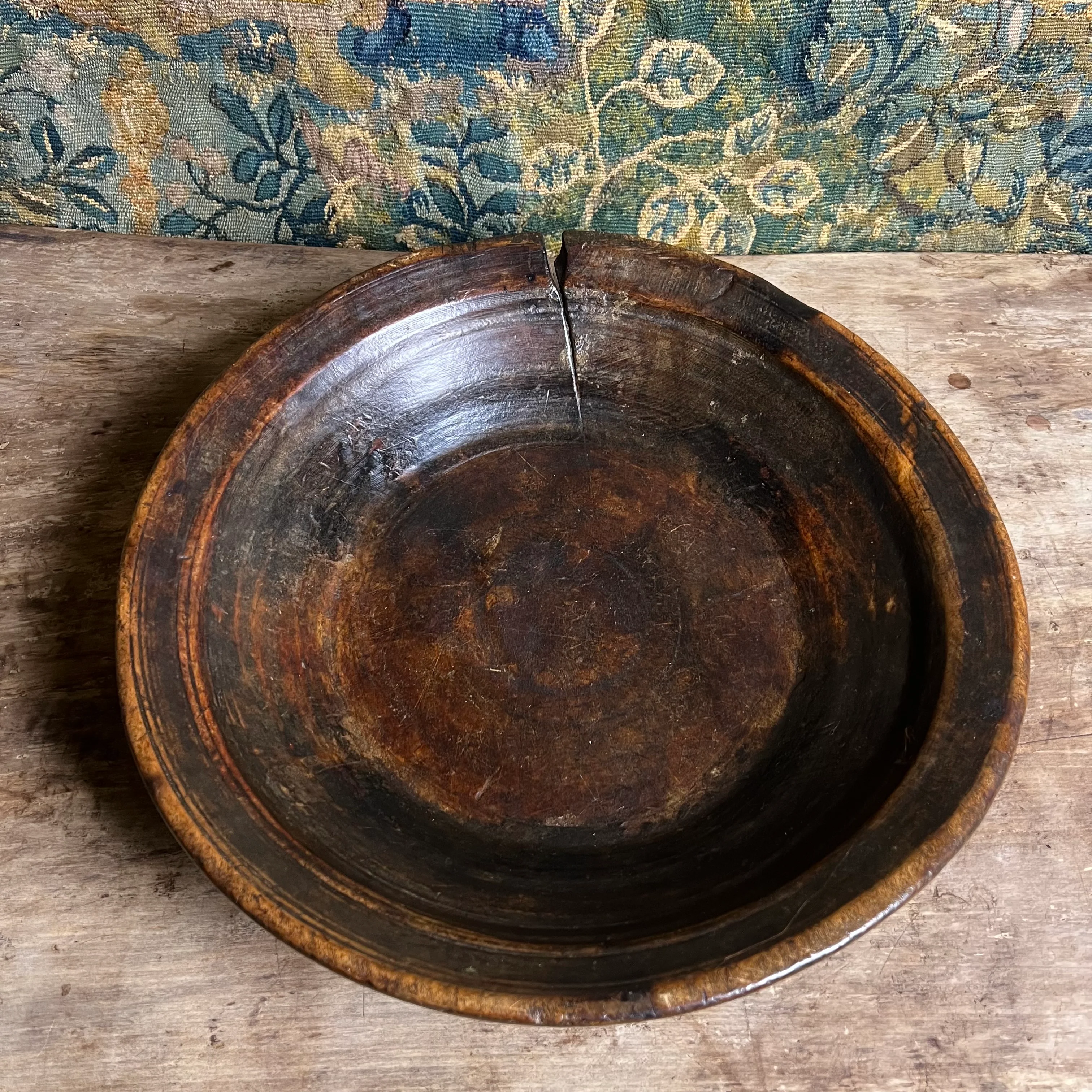
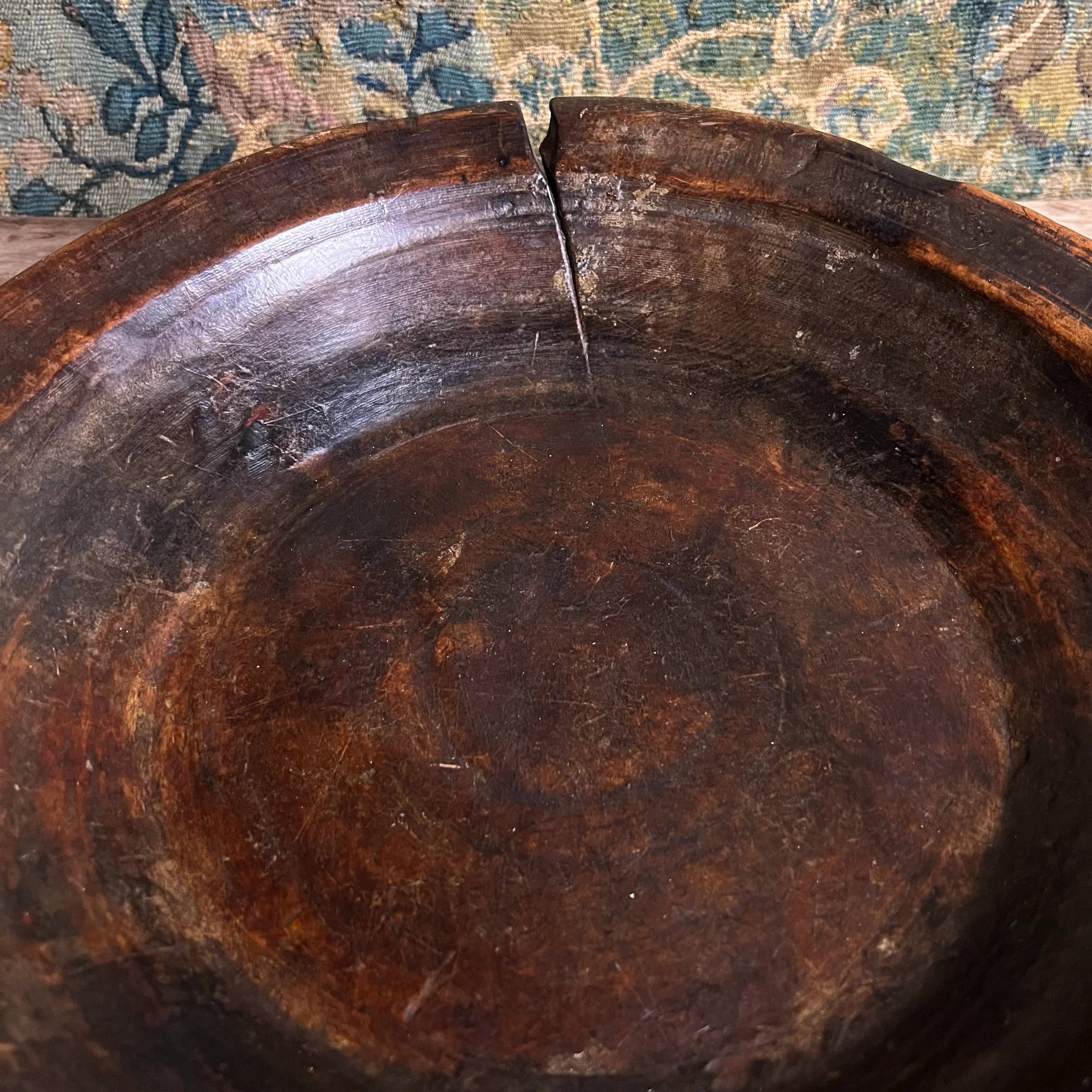
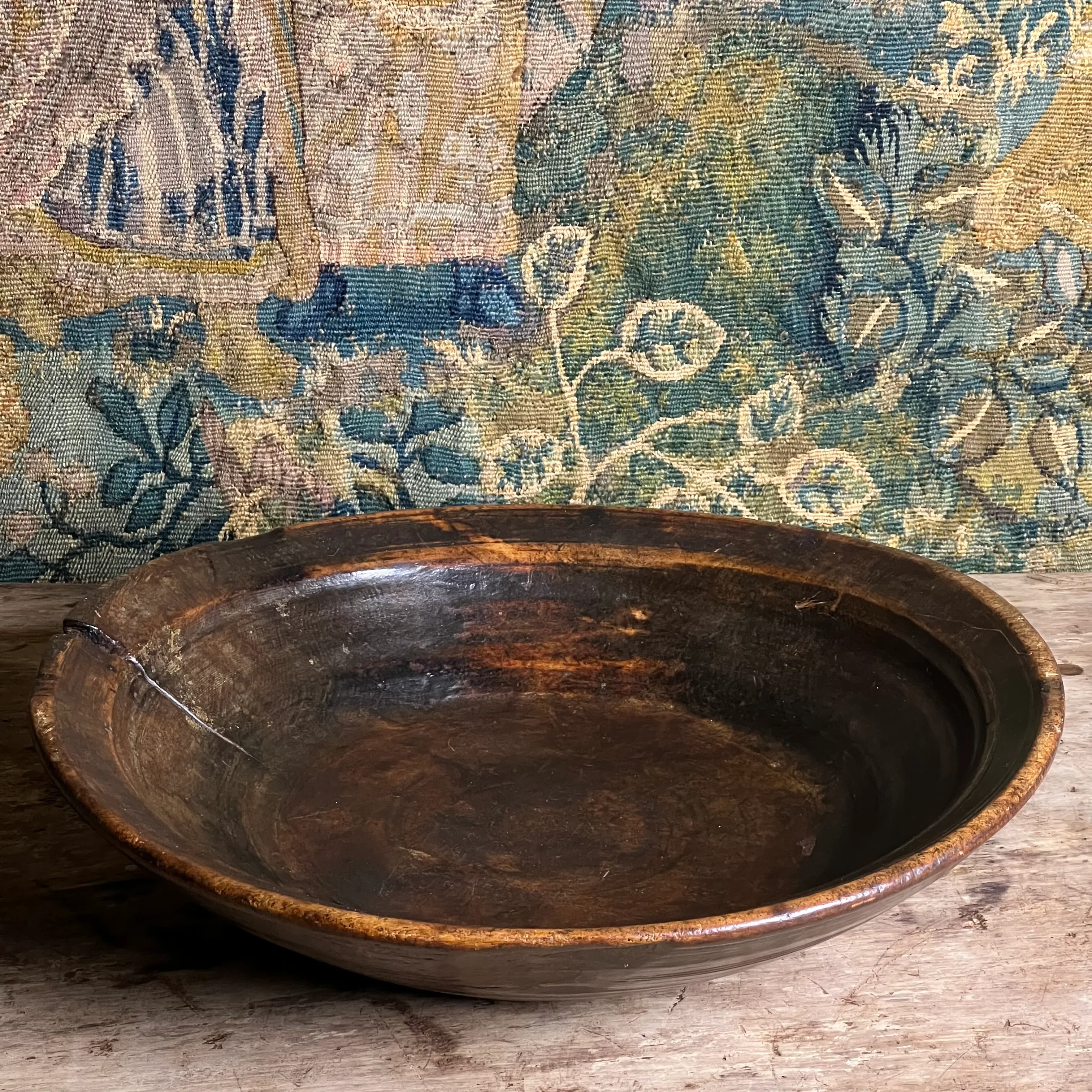
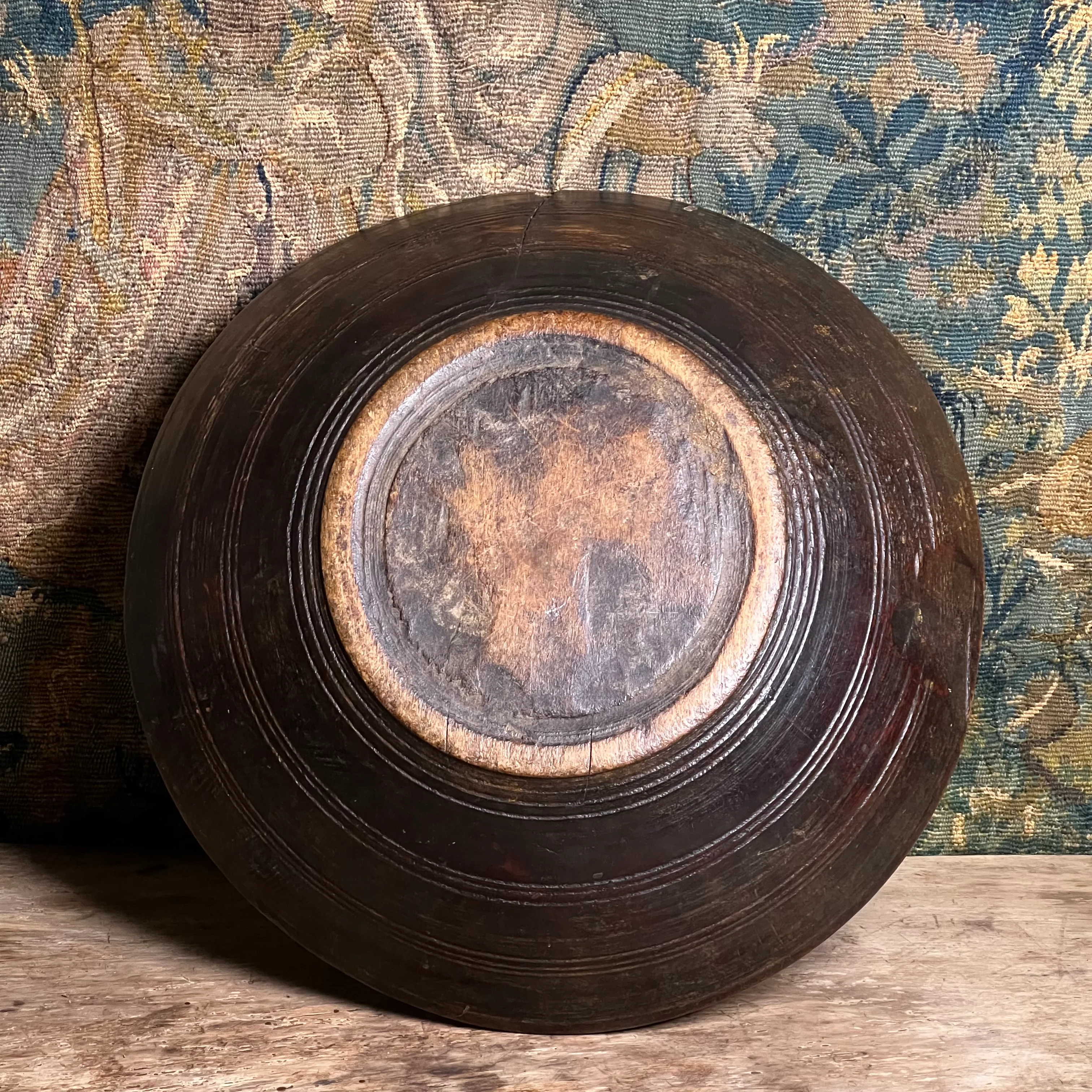
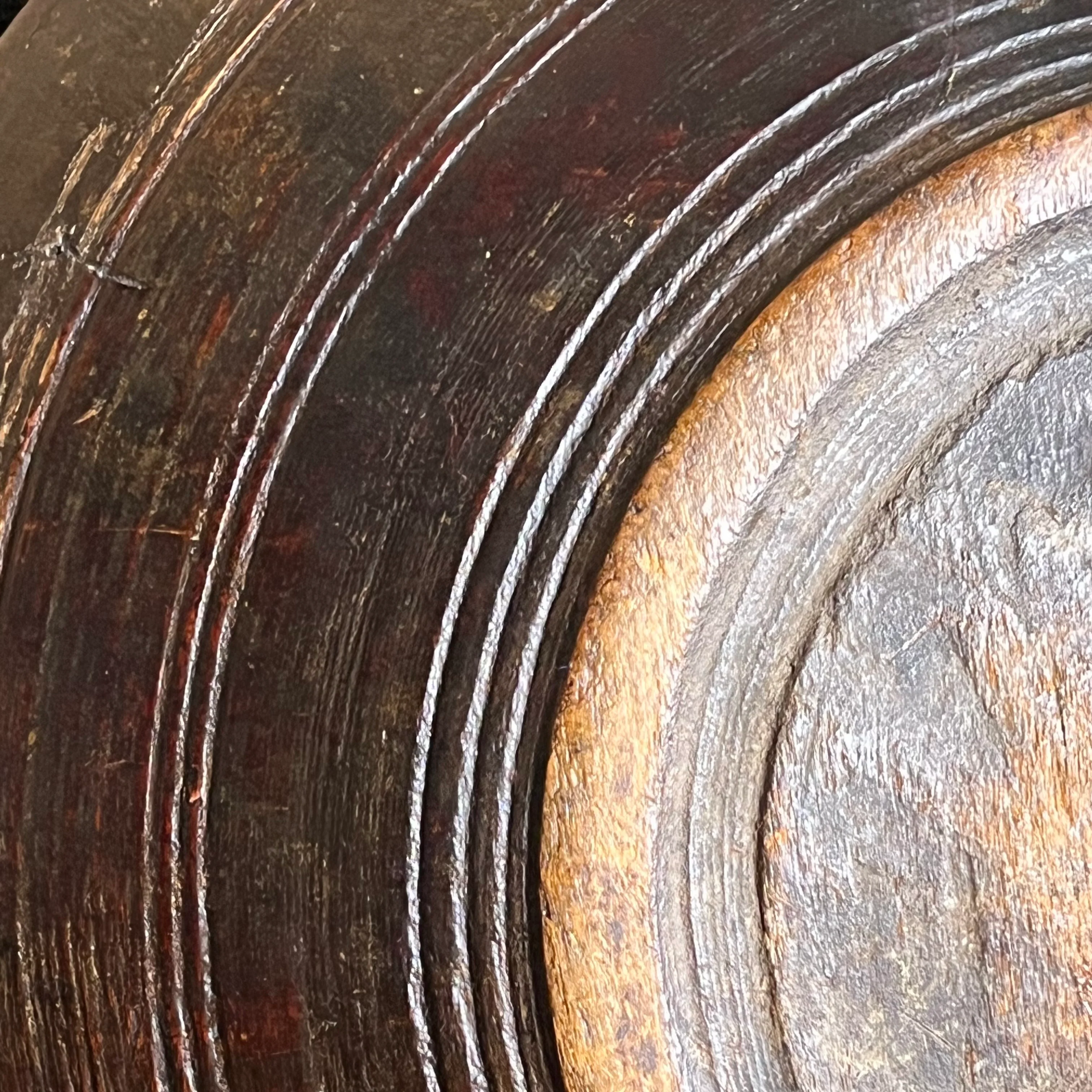
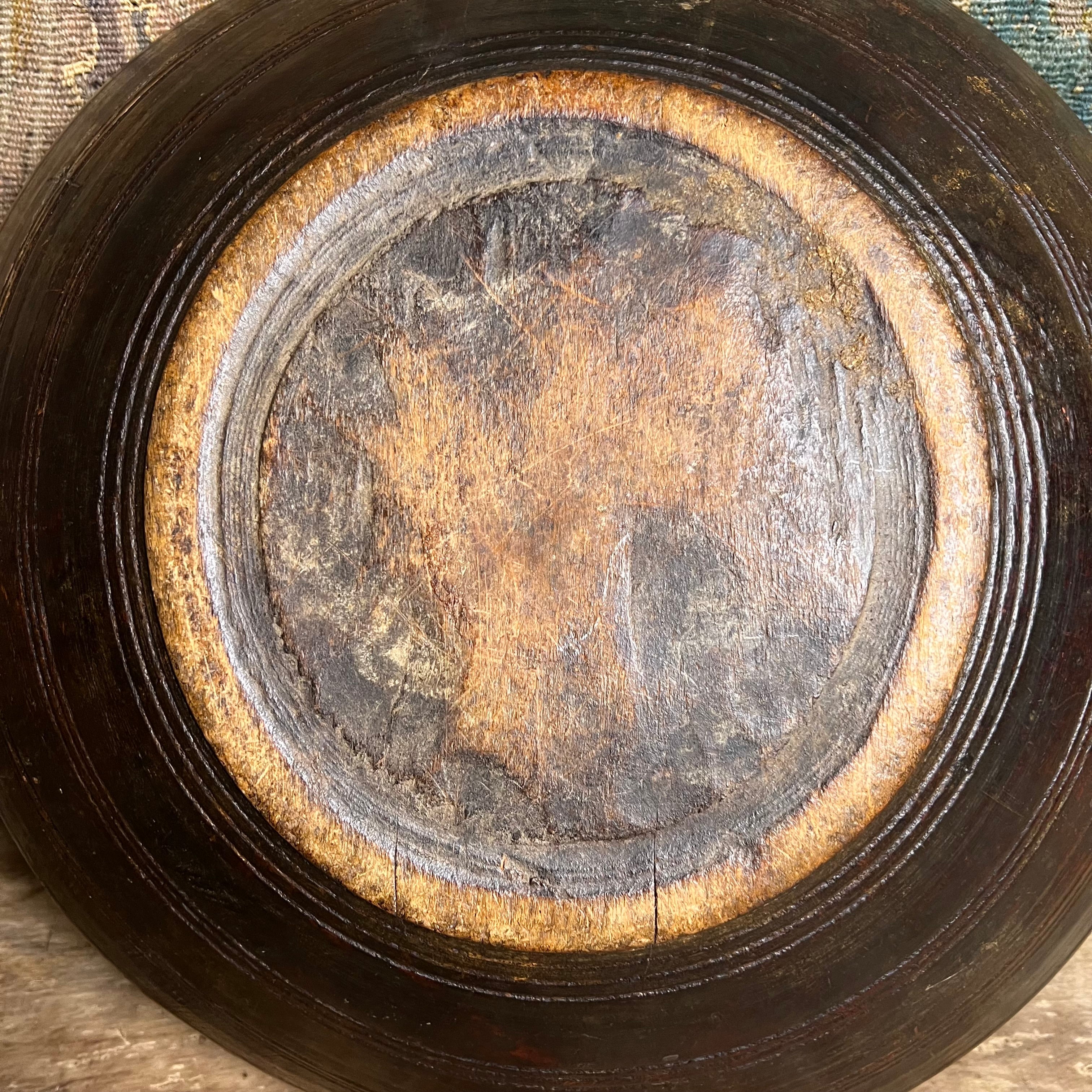
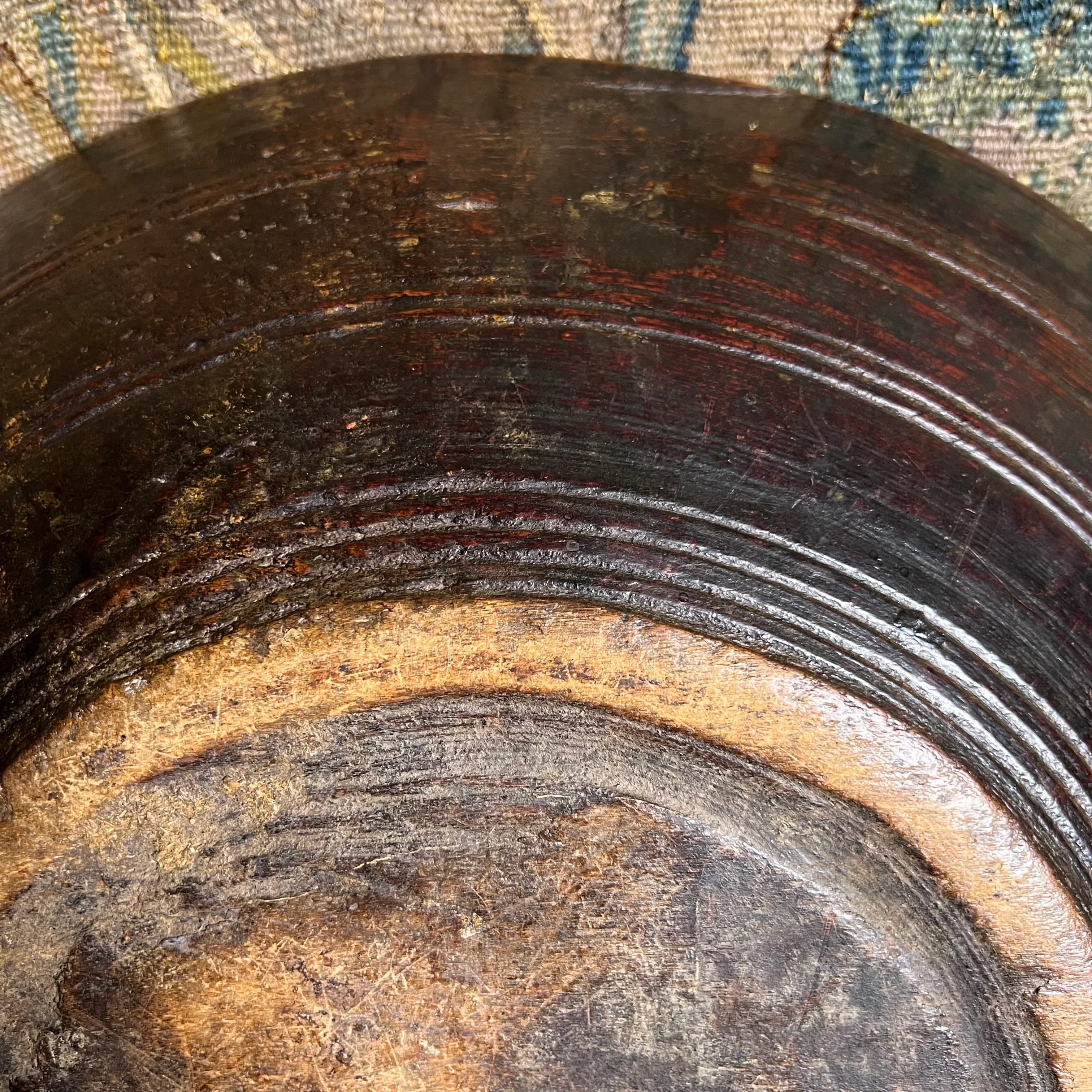
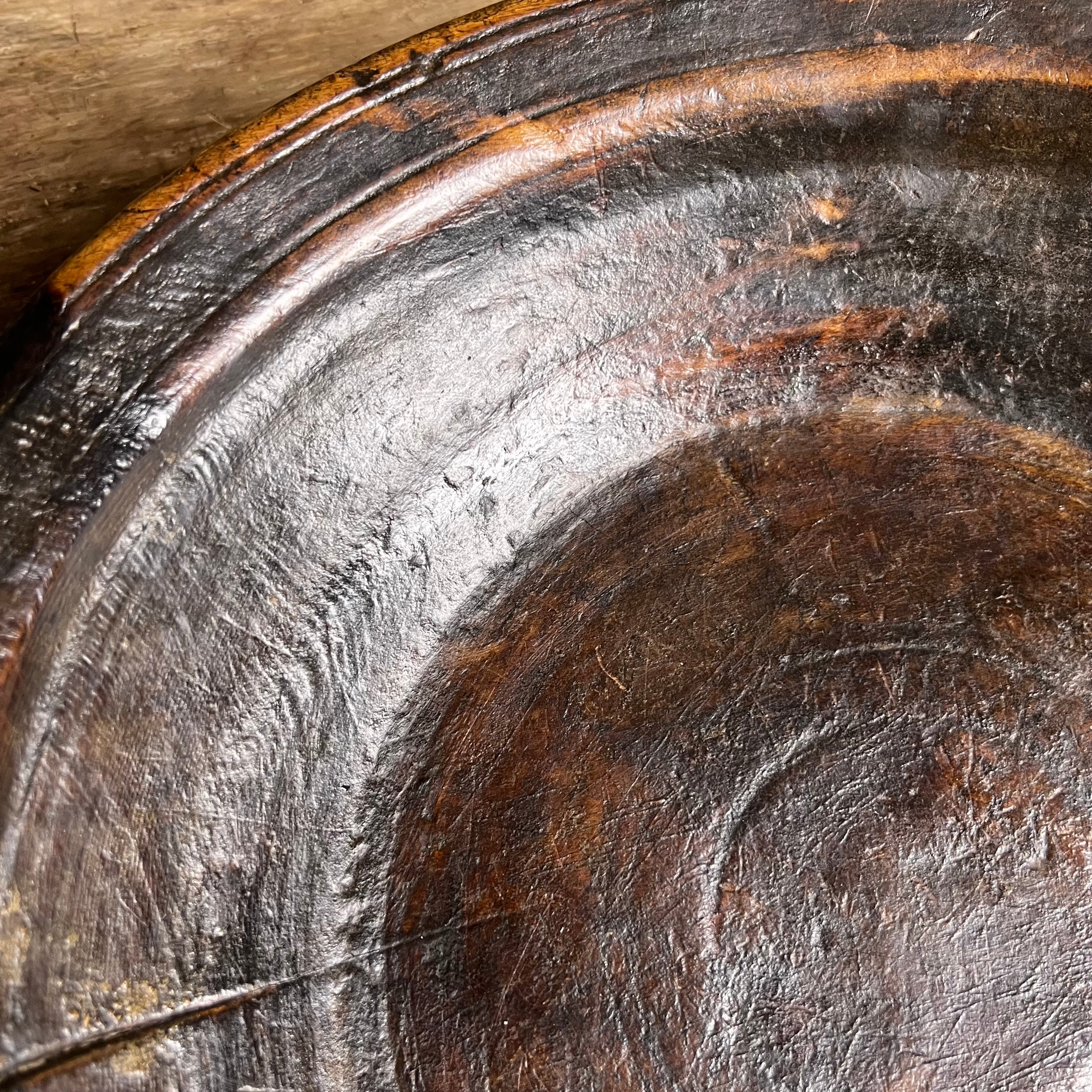
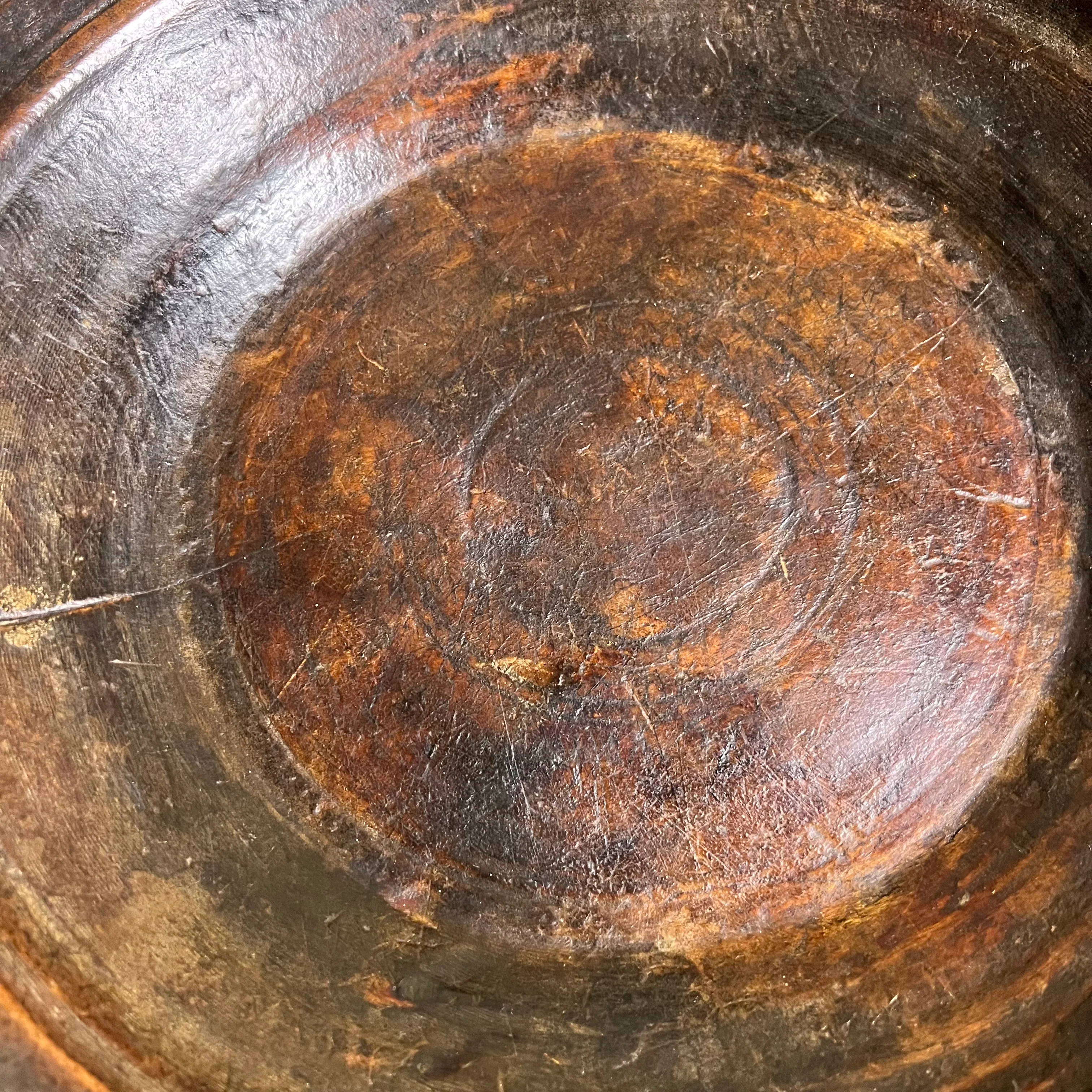
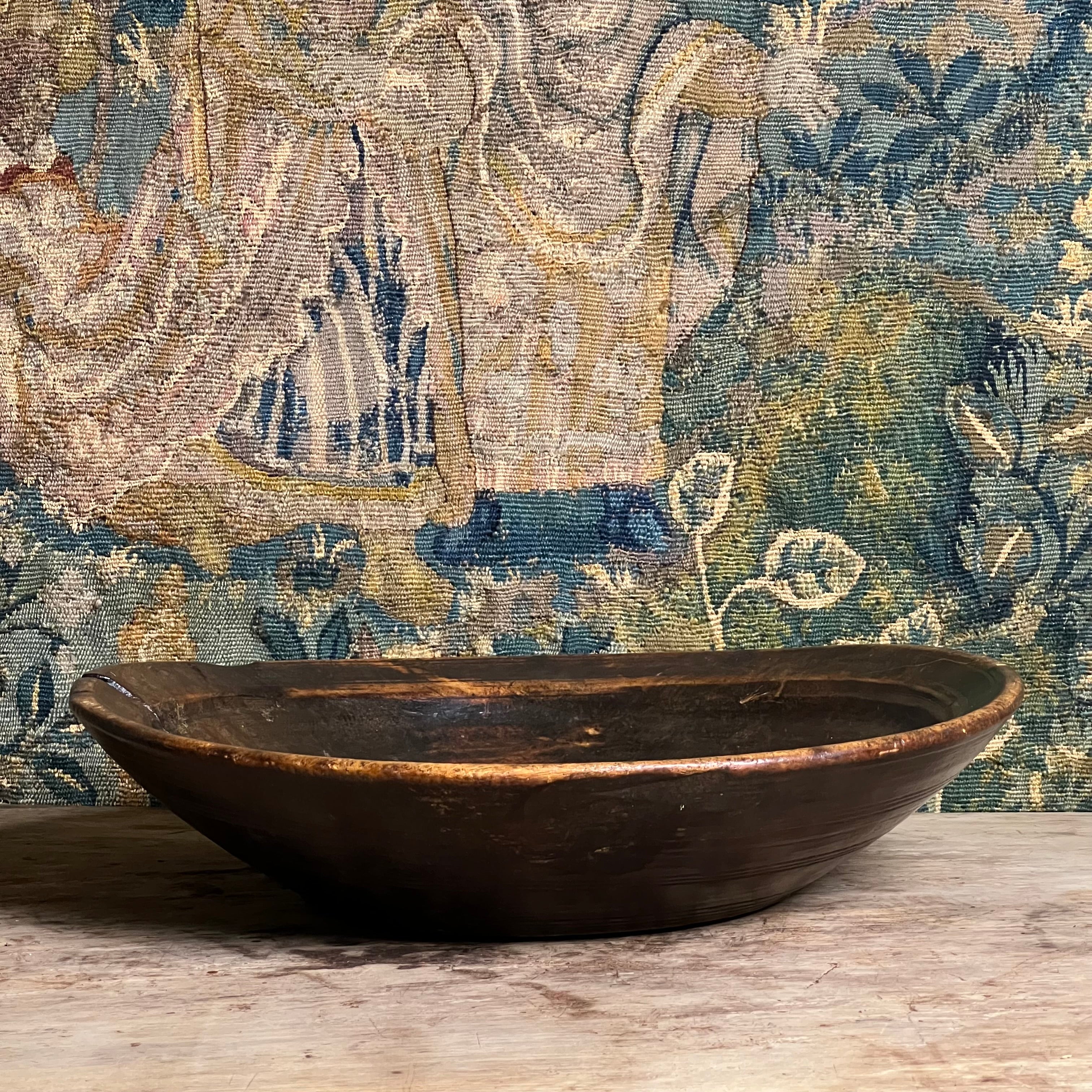
Formed on a manual foot lathe, retaining clear evidence of its making in the visible tool marks to the interior and underside. Broad and shallow in form, with a gently everted rim, it was intended for everyday domestic use — most likely within the dairy or pantry kitchen.
The surface has developed a deep, warm patina through generations of handling, with areas of soft burnishing and wear that speak quietly of long and sustained use. The rich colouration and tight grain are characteristic of fruitwood, a favoured material for early domestic treen due to its strength, fine texture, and ability to age beautifully over time.
A historic radial split runs from the rim into the body of the bowl, entirely consistent with the age and nature of the wood, forming part of its sublime character rather than detracting from its integrity.
Large in scale yet shallow in depth, a great example of vernacular English domestic life — utilitarian, primitive, and quietly sculptural.
Original: $2,395.03
-70%$2,395.03
$718.51More Images
An Early English Turned Applewood Dairy Bowl, Late 17th or earlier
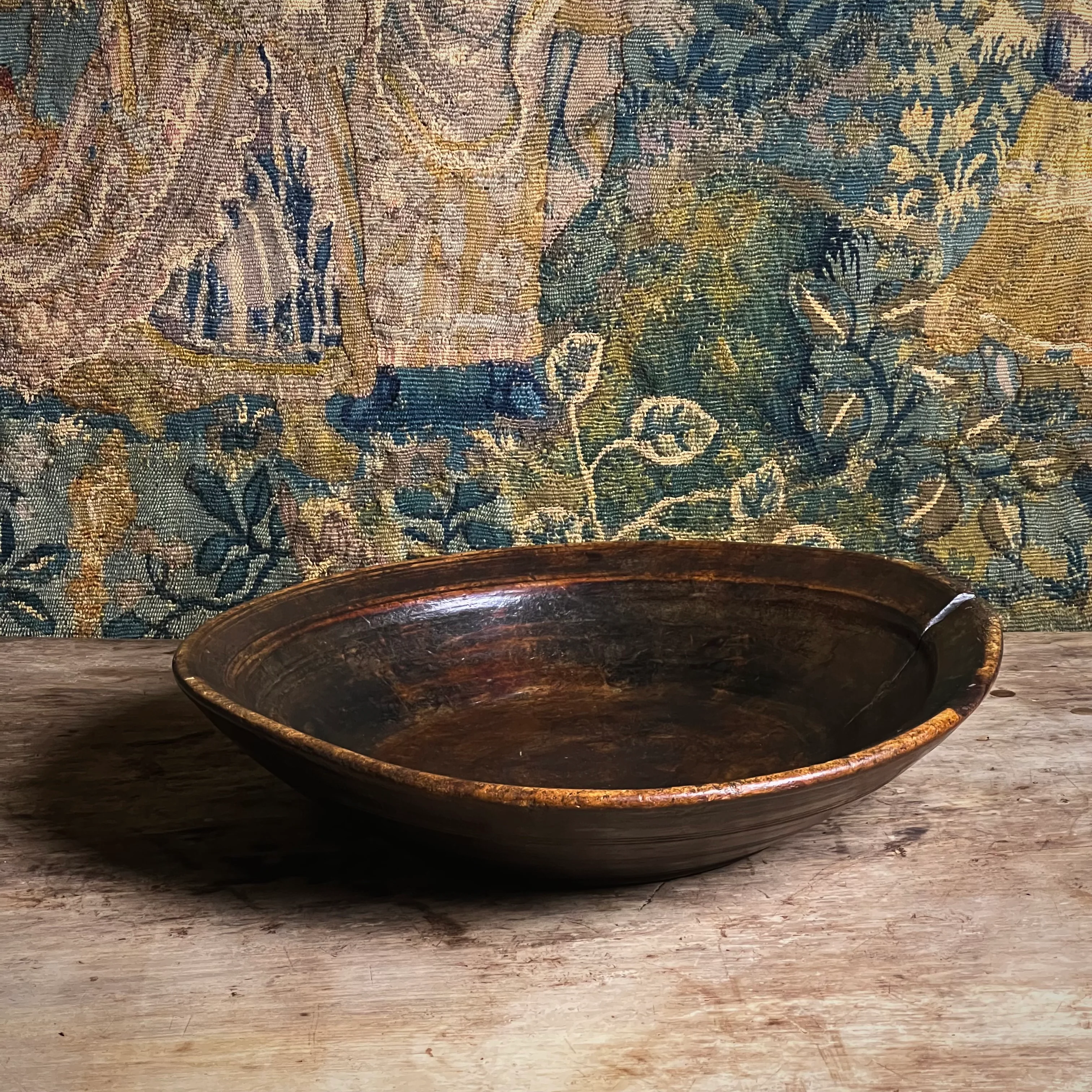
A early, humble and perfectly patinated bowl, hand-turned from dense applewood in the late 17th Century or earlier.
Formed on a manual foot lathe, retaining clear evidence of its making in the visible tool marks to the interior and underside. Broad and shallow in form, with a gently everted rim, it was intended for everyday domestic use — most likely within the dairy or pantry kitchen.
The surface has developed a deep, warm patina through generations of handling, with areas of soft burnishing and wear that speak quietly of long and sustained use. The rich colouration and tight grain are characteristic of fruitwood, a favoured material for early domestic treen due to its strength, fine texture, and ability to age beautifully over time.
A historic radial split runs from the rim into the body of the bowl, entirely consistent with the age and nature of the wood, forming part of its sublime character rather than detracting from its integrity.
Large in scale yet shallow in depth, a great example of vernacular English domestic life — utilitarian, primitive, and quietly sculptural.
Product Information
Product Information
Shipping & Returns
Shipping & Returns
Description
A early, humble and perfectly patinated bowl, hand-turned from dense applewood in the late 17th Century or earlier.
Formed on a manual foot lathe, retaining clear evidence of its making in the visible tool marks to the interior and underside. Broad and shallow in form, with a gently everted rim, it was intended for everyday domestic use — most likely within the dairy or pantry kitchen.
The surface has developed a deep, warm patina through generations of handling, with areas of soft burnishing and wear that speak quietly of long and sustained use. The rich colouration and tight grain are characteristic of fruitwood, a favoured material for early domestic treen due to its strength, fine texture, and ability to age beautifully over time.
A historic radial split runs from the rim into the body of the bowl, entirely consistent with the age and nature of the wood, forming part of its sublime character rather than detracting from its integrity.
Large in scale yet shallow in depth, a great example of vernacular English domestic life — utilitarian, primitive, and quietly sculptural.