Romanesque Crucifixion – North Italian, c.1180–1230 ("The Spencer Crucifixion")
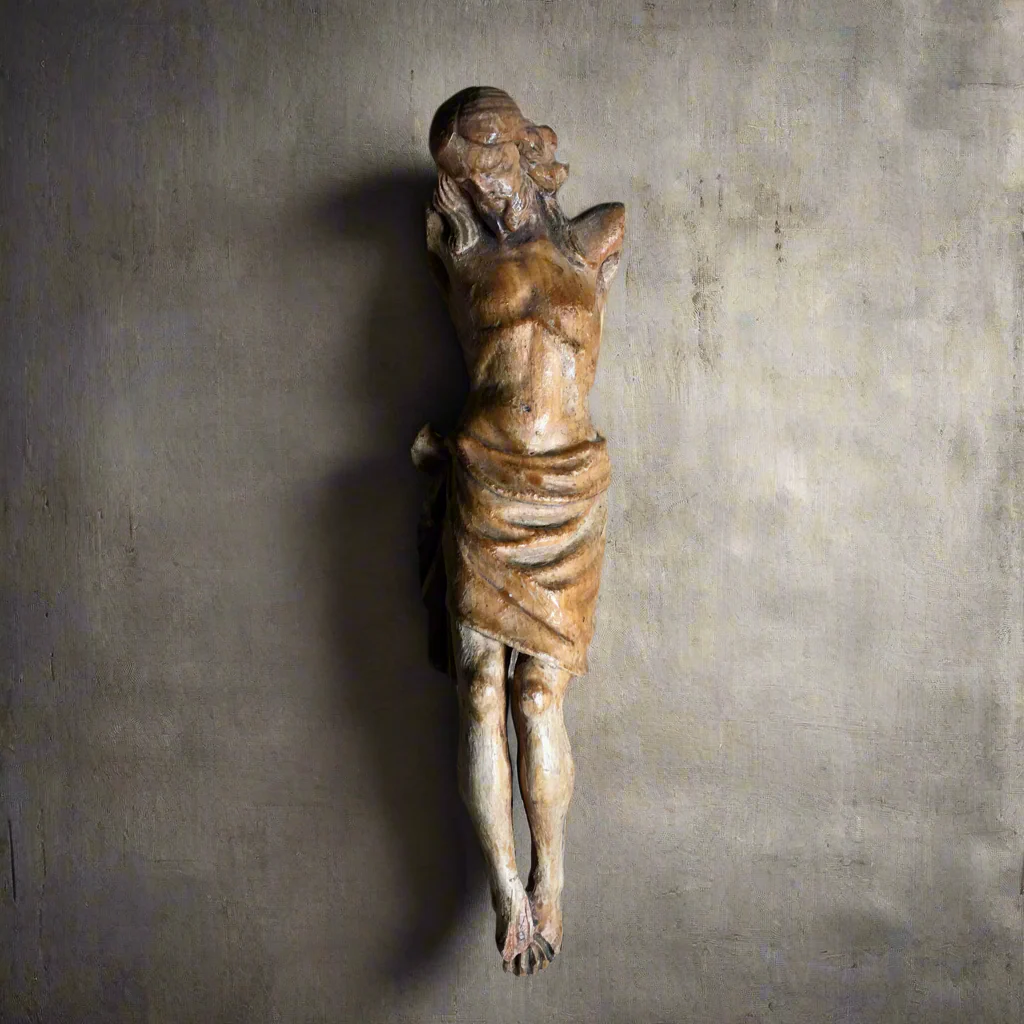
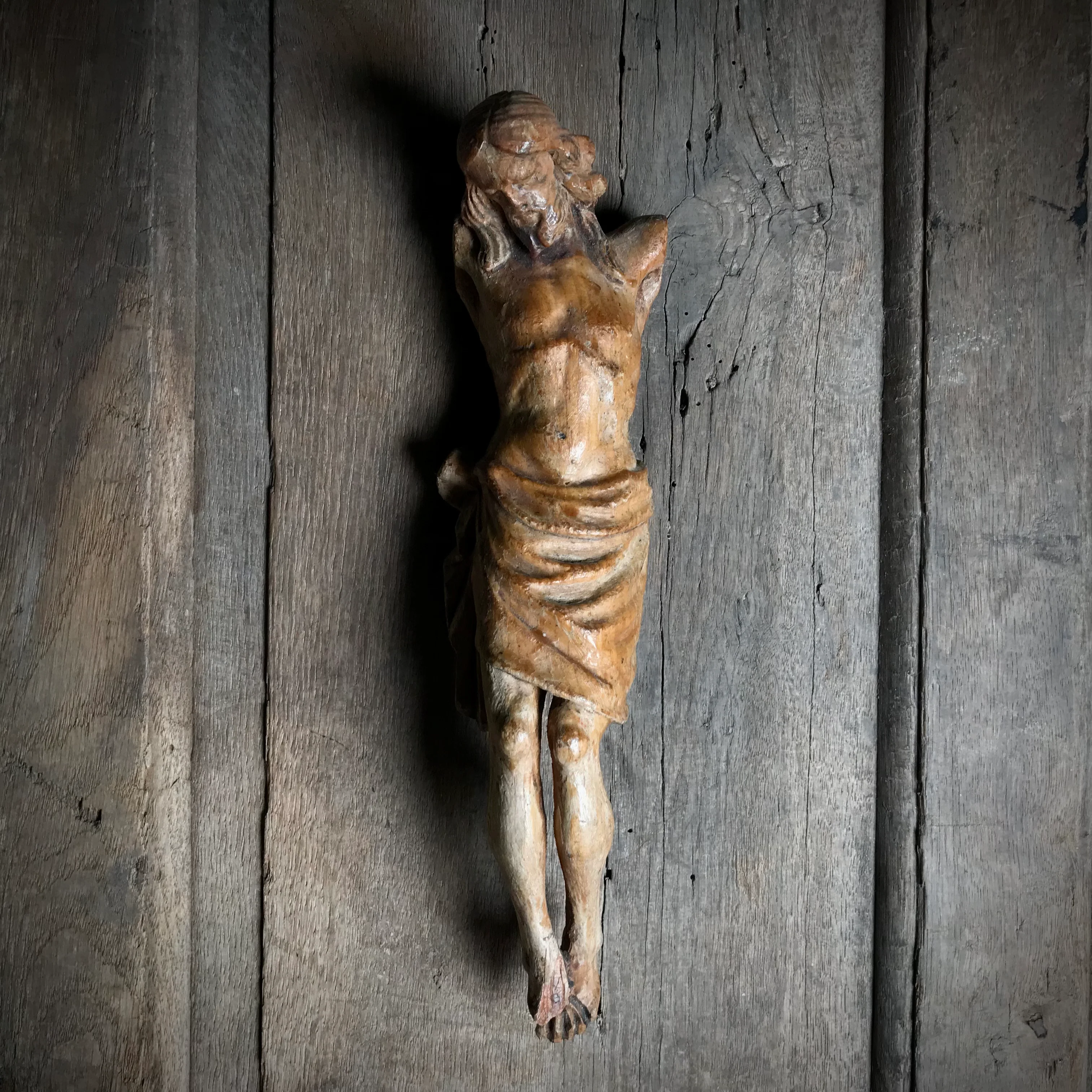
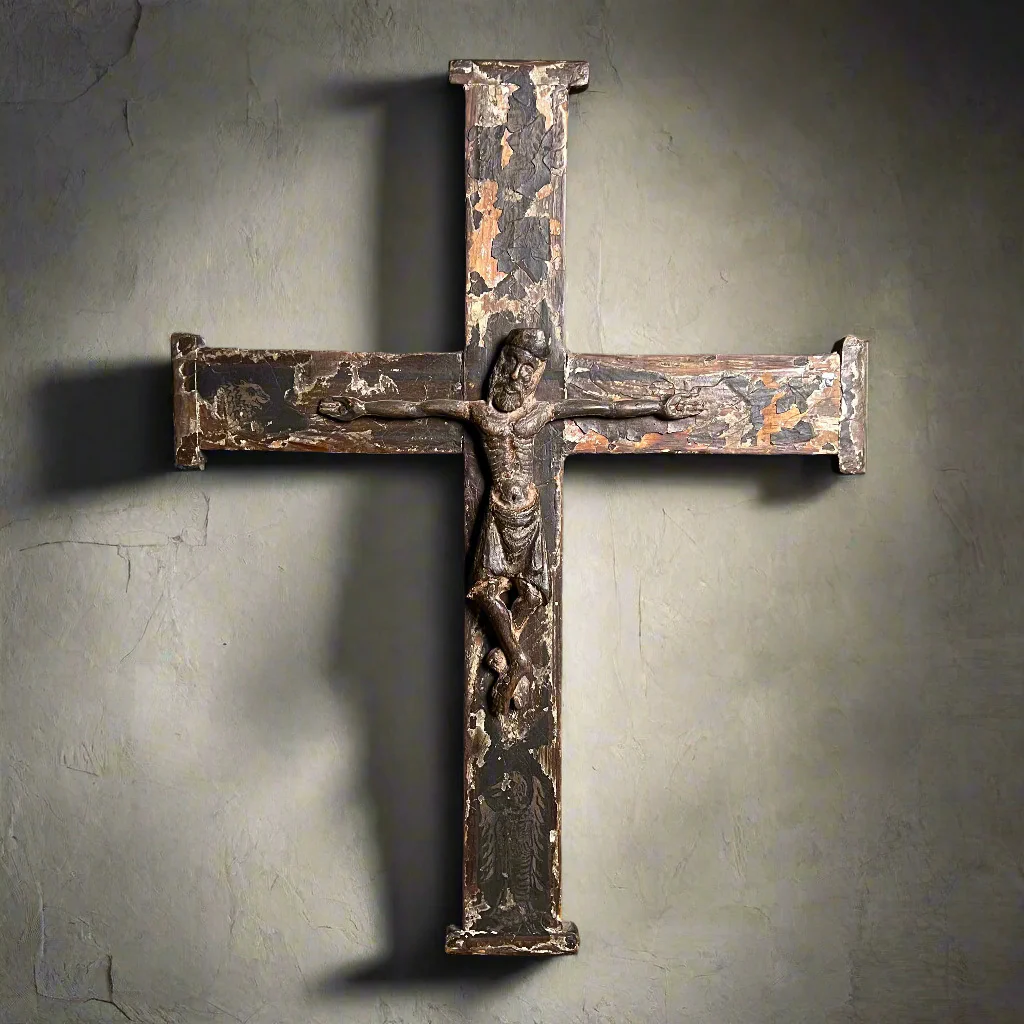
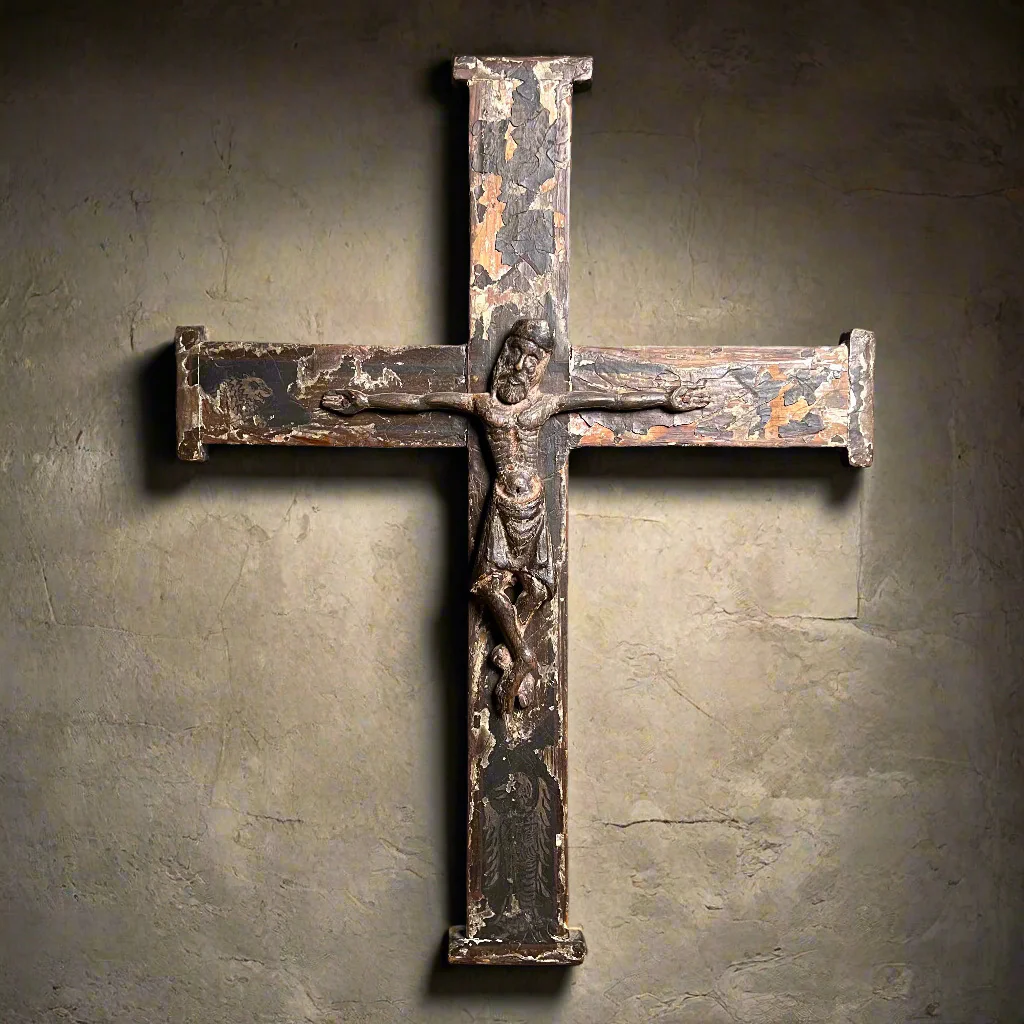
An exceptional and evocative Romanesque carved wood Crucifixion group, retaining its original broad cross and gesso decoration, likely from Northern Italy (or adjacent Ibero-Italian region) c.1180-1230.
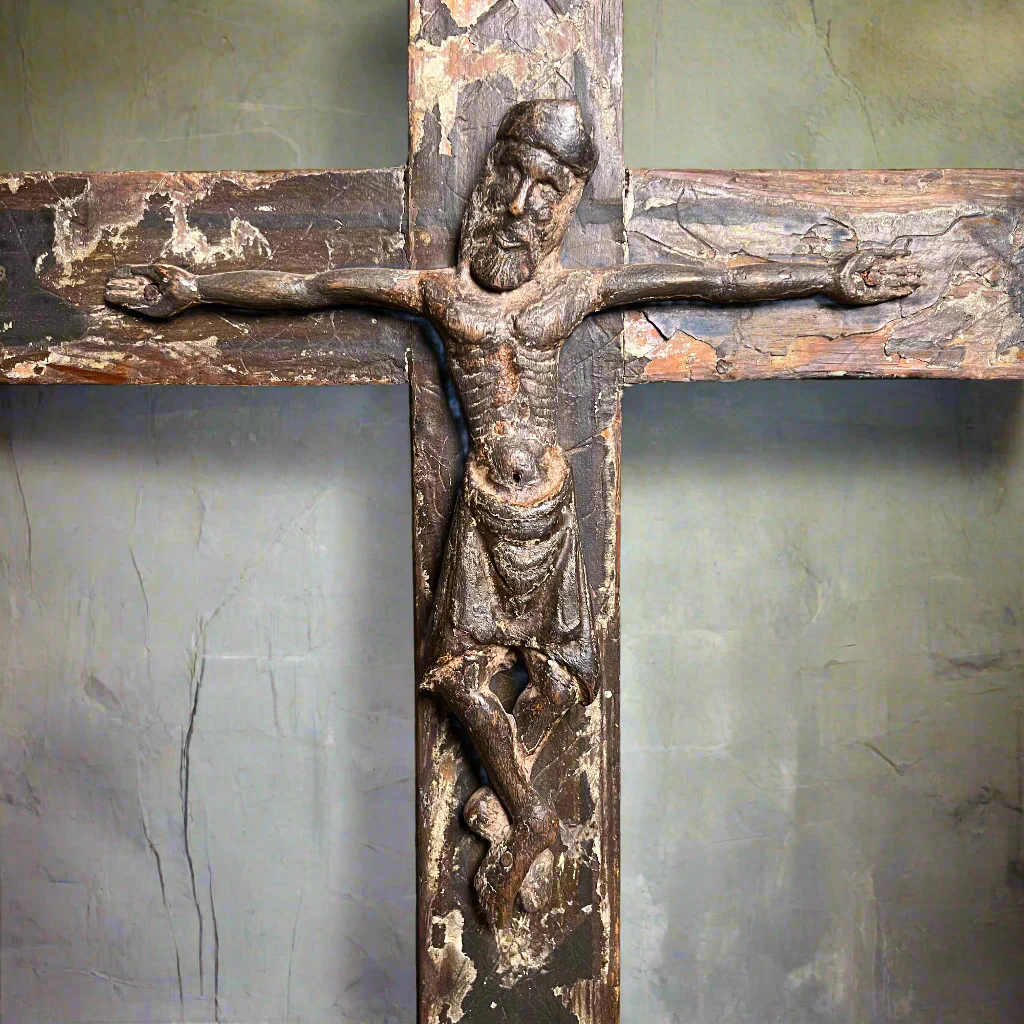
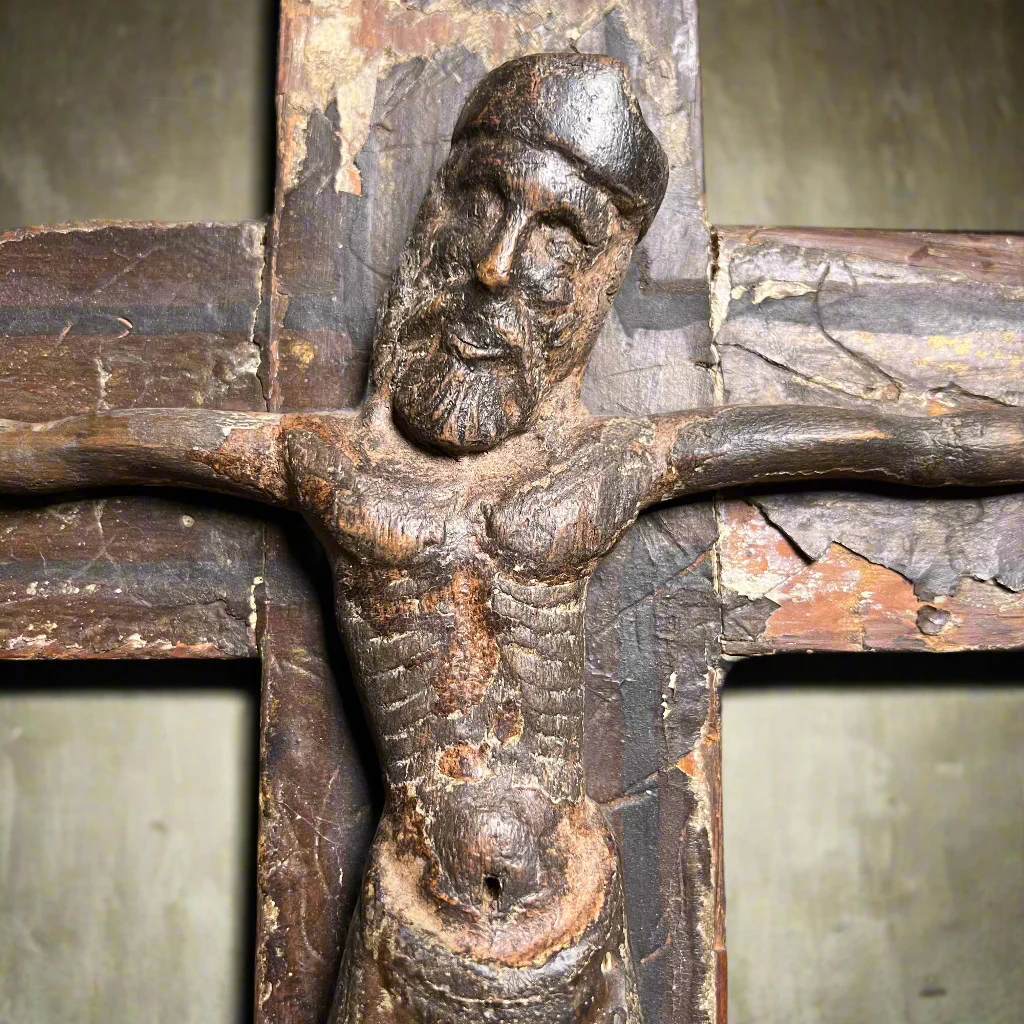
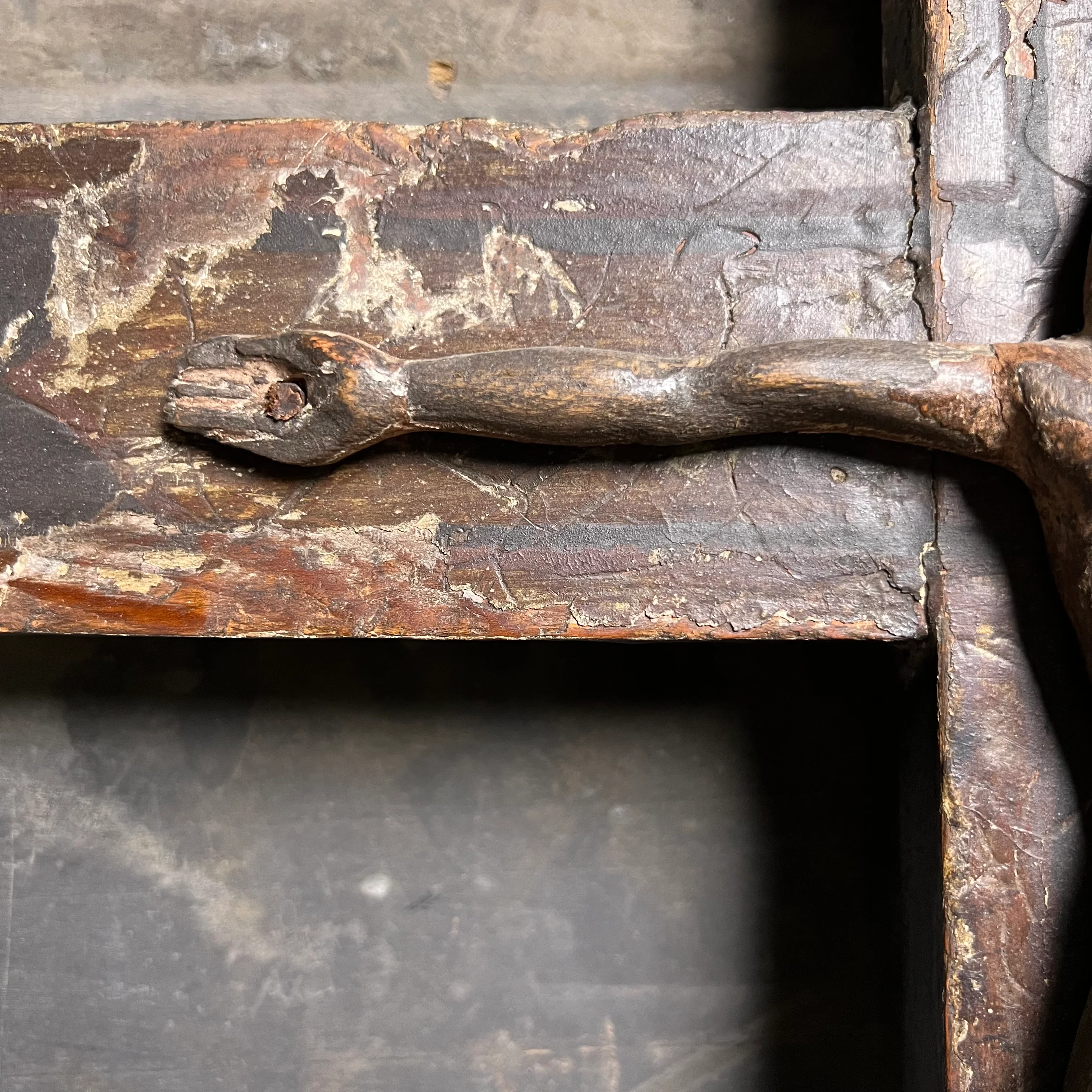
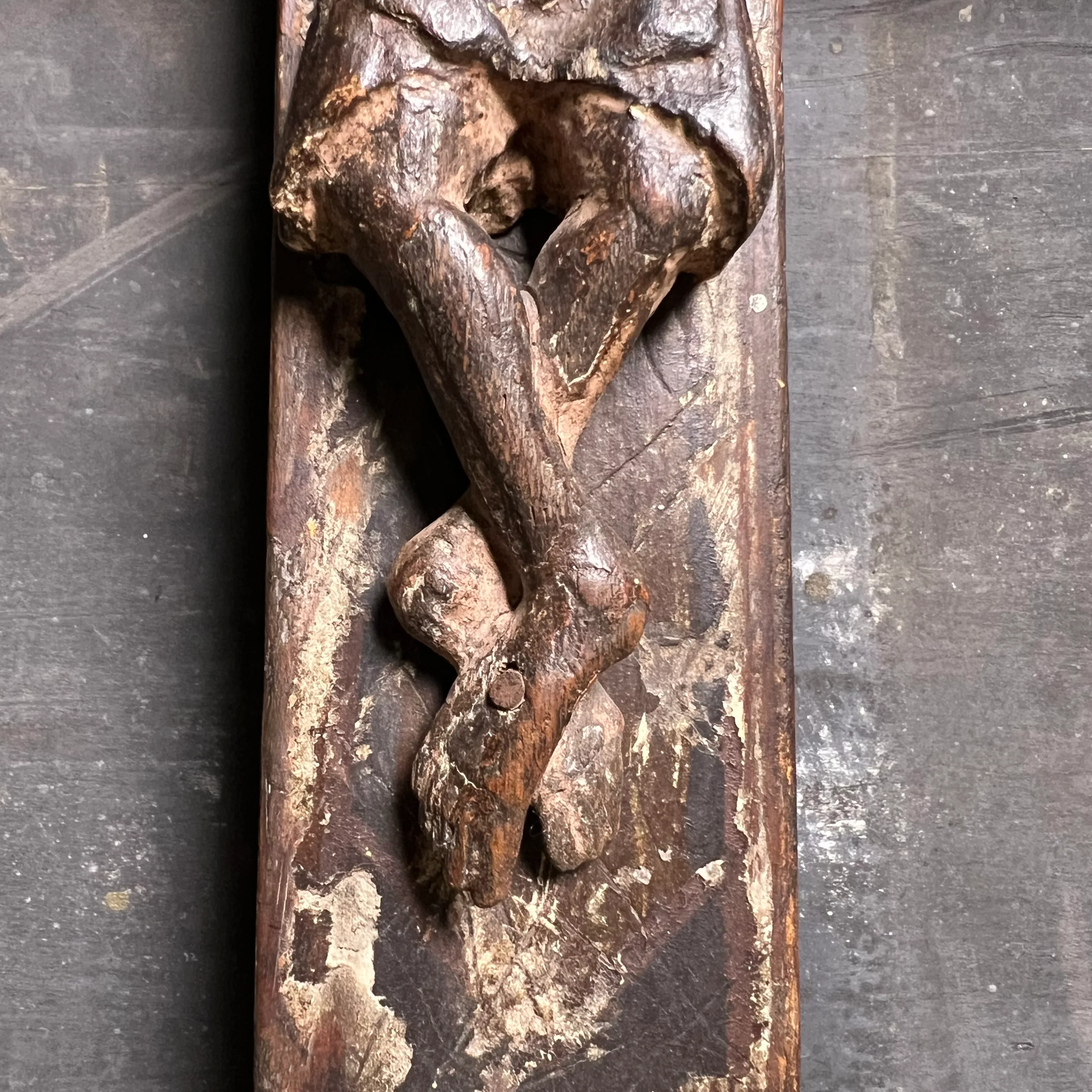
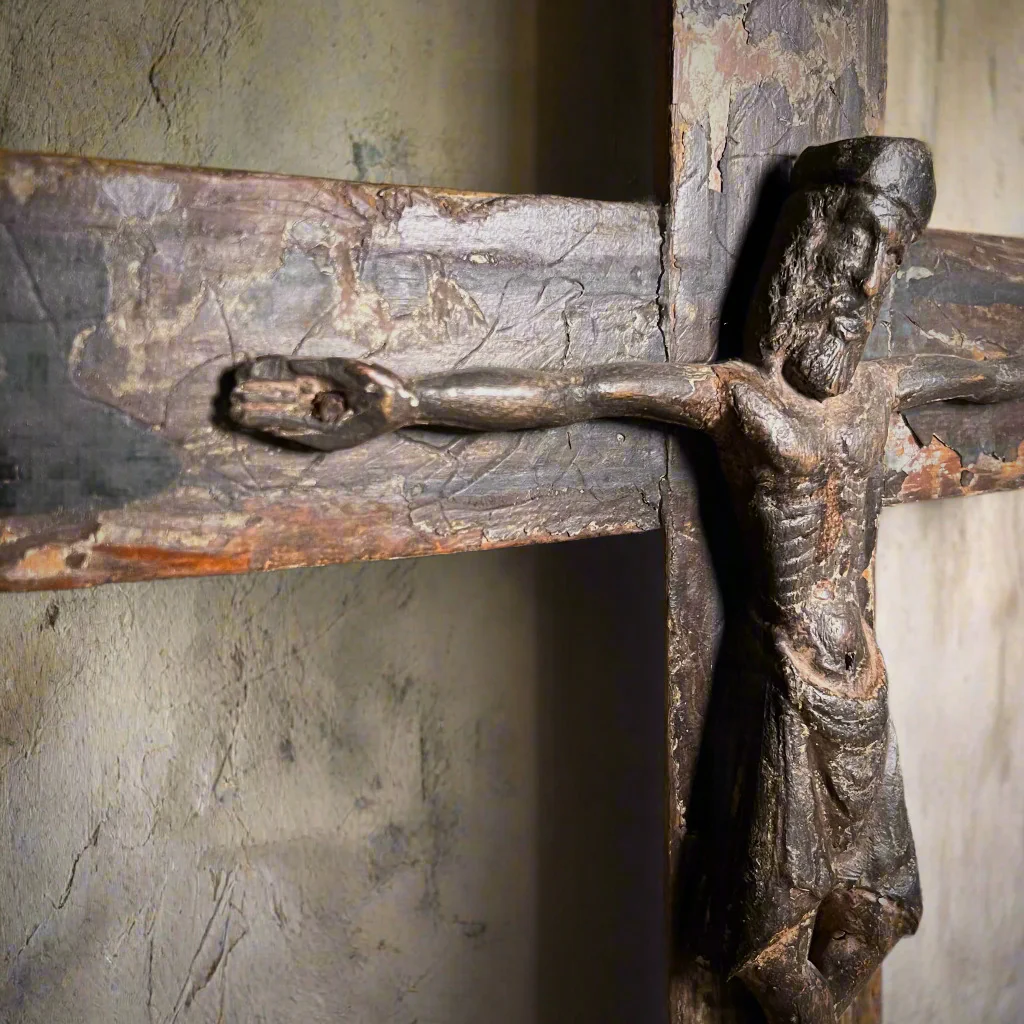
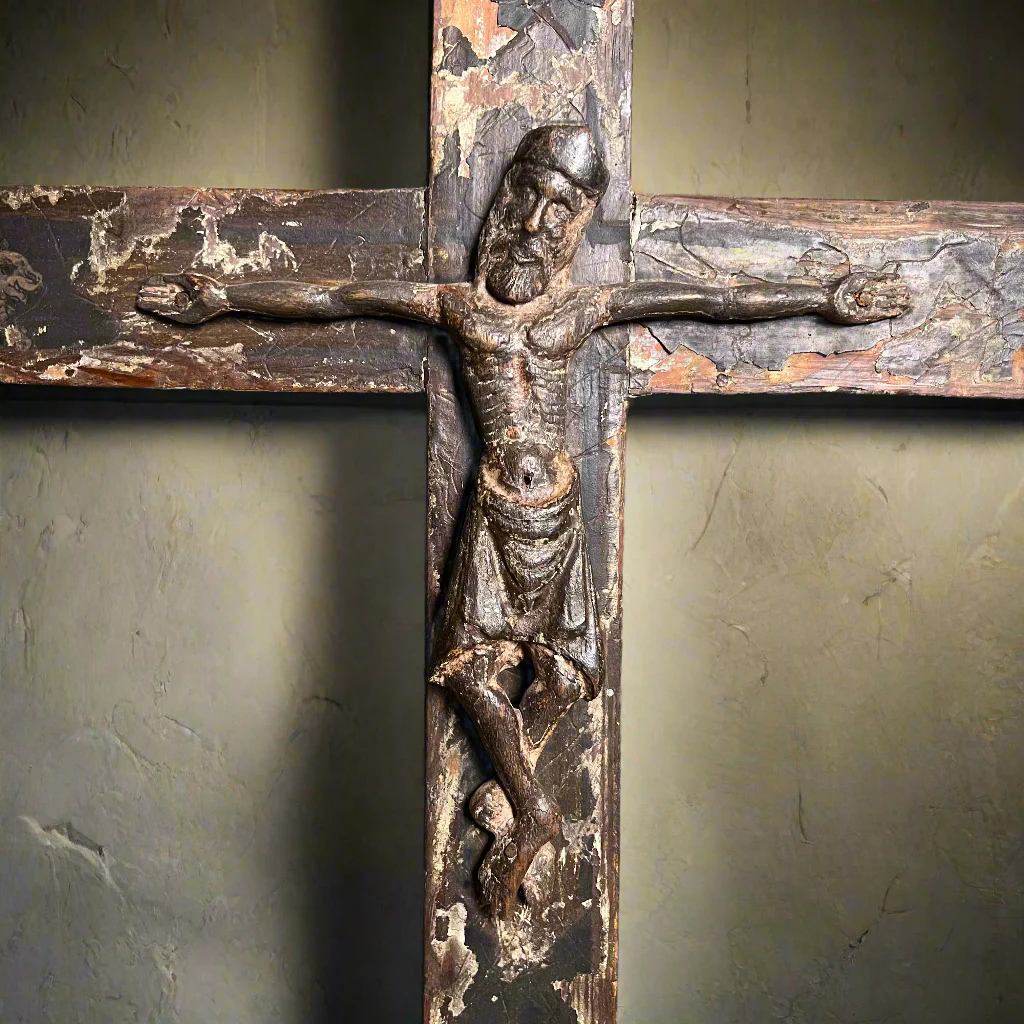
The Corpus Christi is presented in a fully frontal, hieratic pose — arms horizontal, legs rigid, and the body carved with deliberate stylisation. The face is serene and symmetrical, recalling the enduring iconography of the Christus Triumphans tradition, where Christ is depicted not in death or agony, but in divine, eternal stillness. The anatomical modelling is schematic and provincial, yet deeply powerful — a hallmark of early Romanesque devotion.
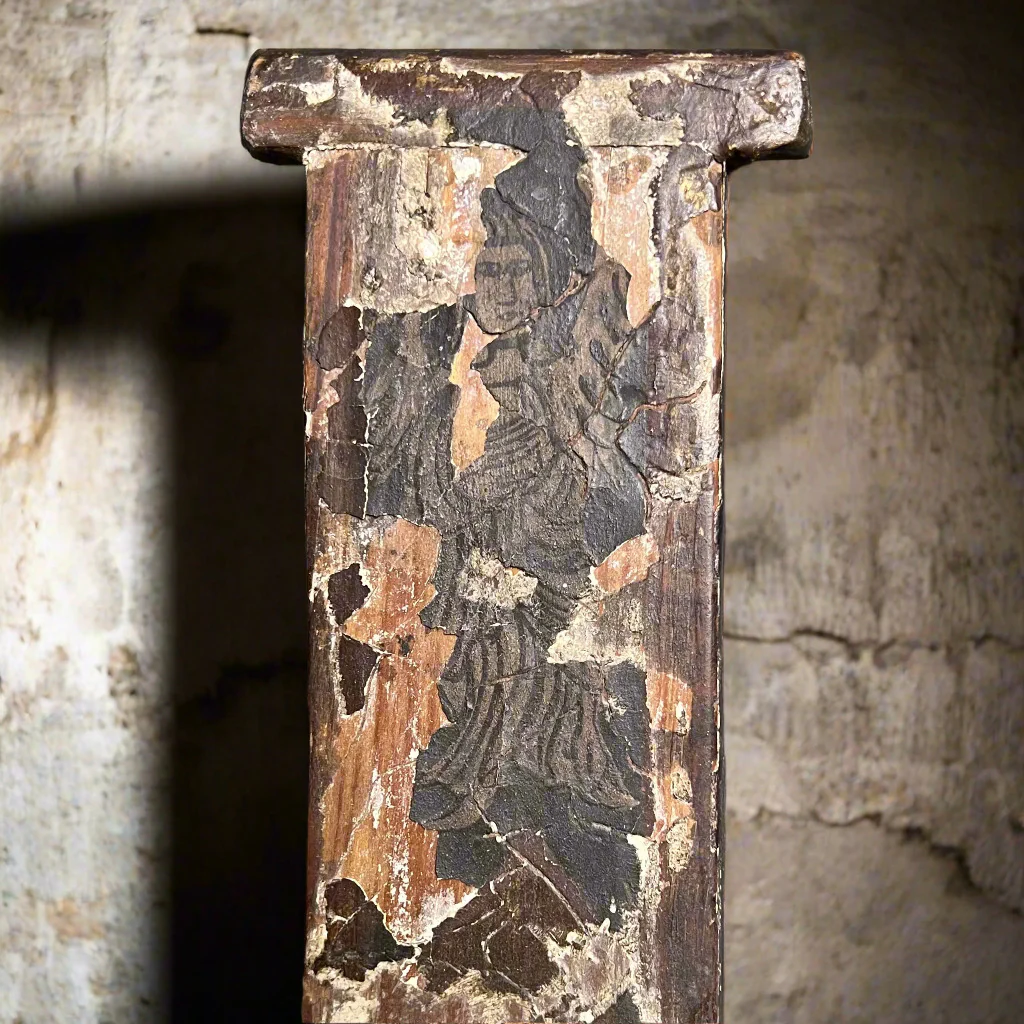
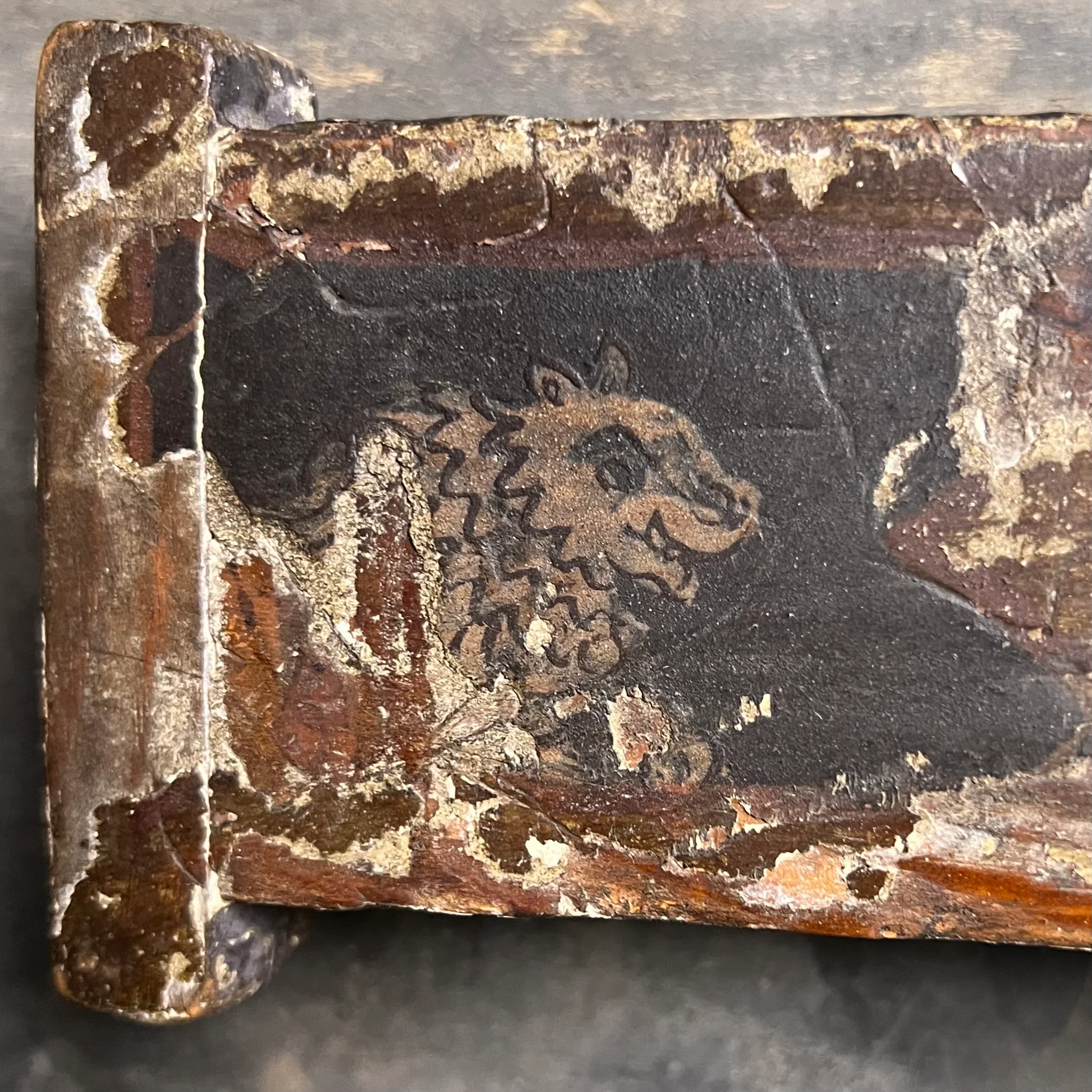
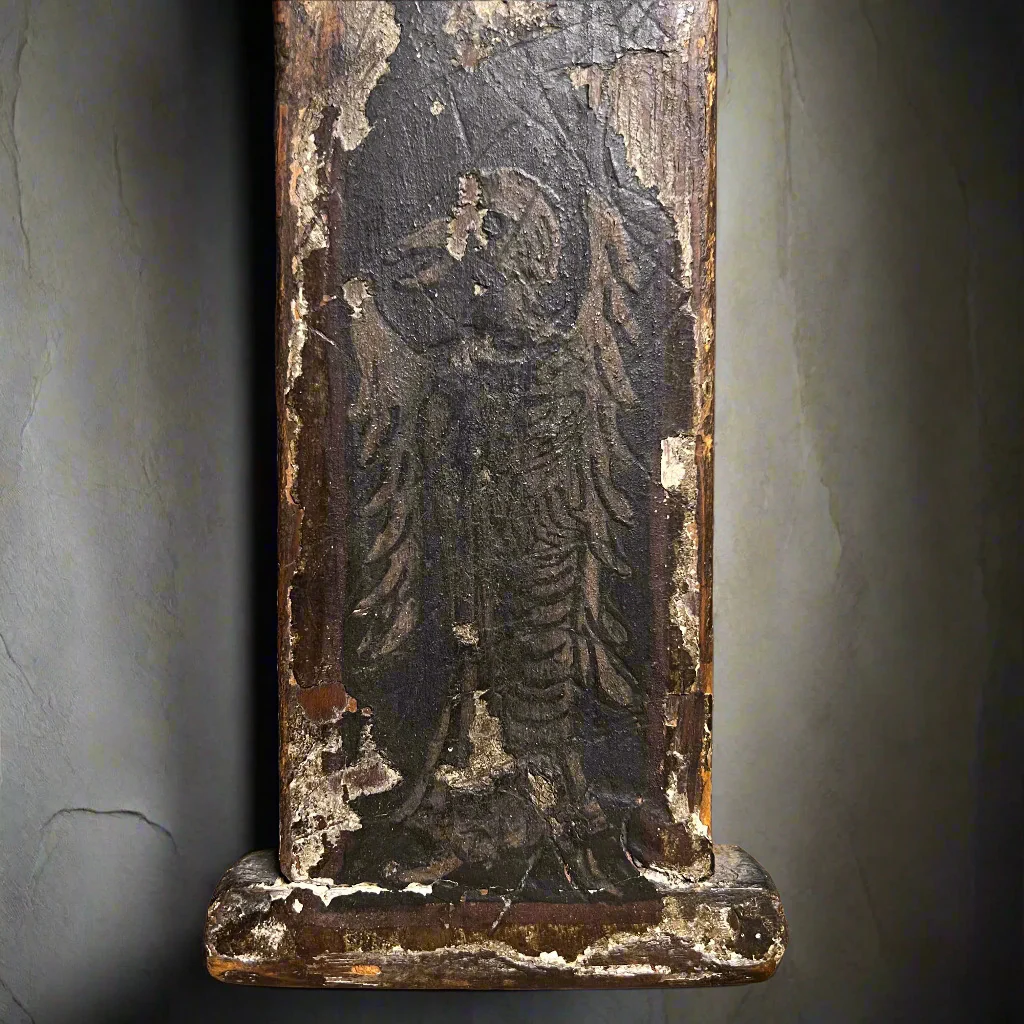
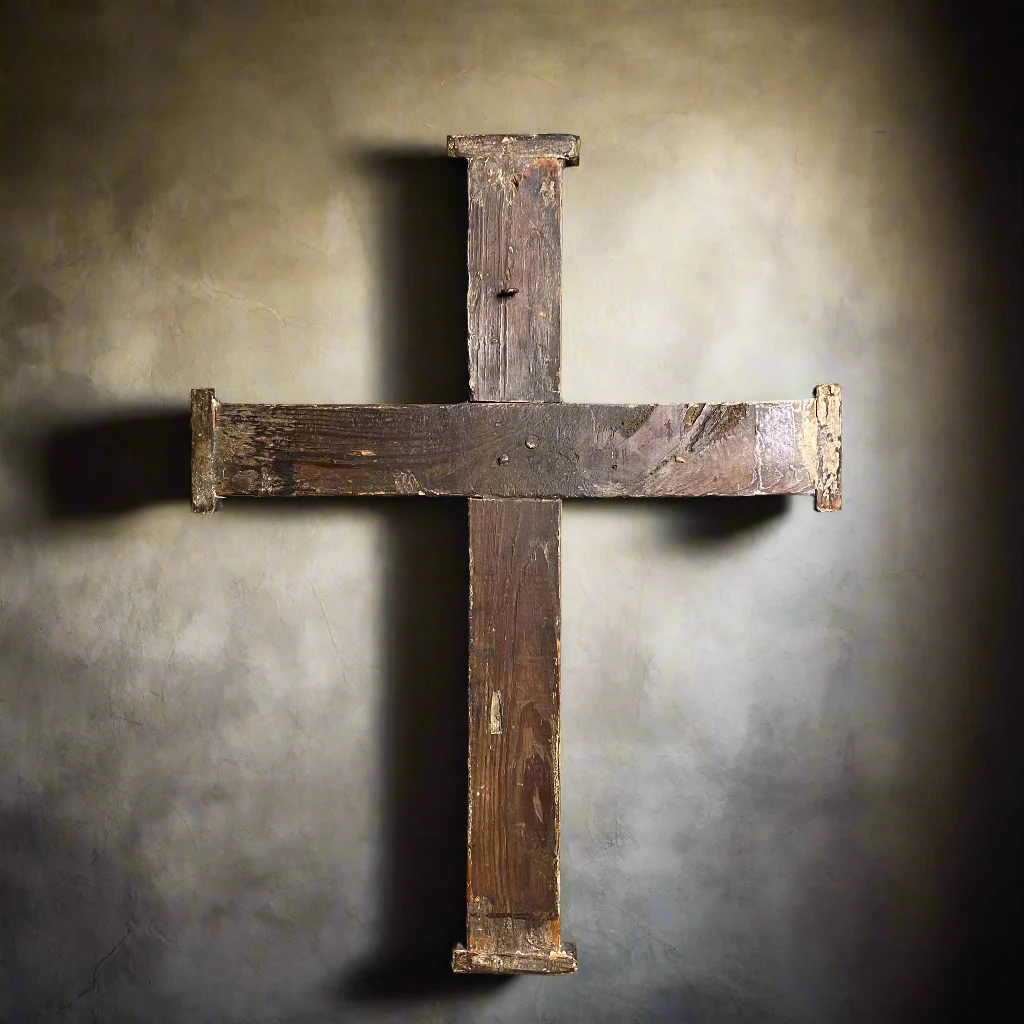
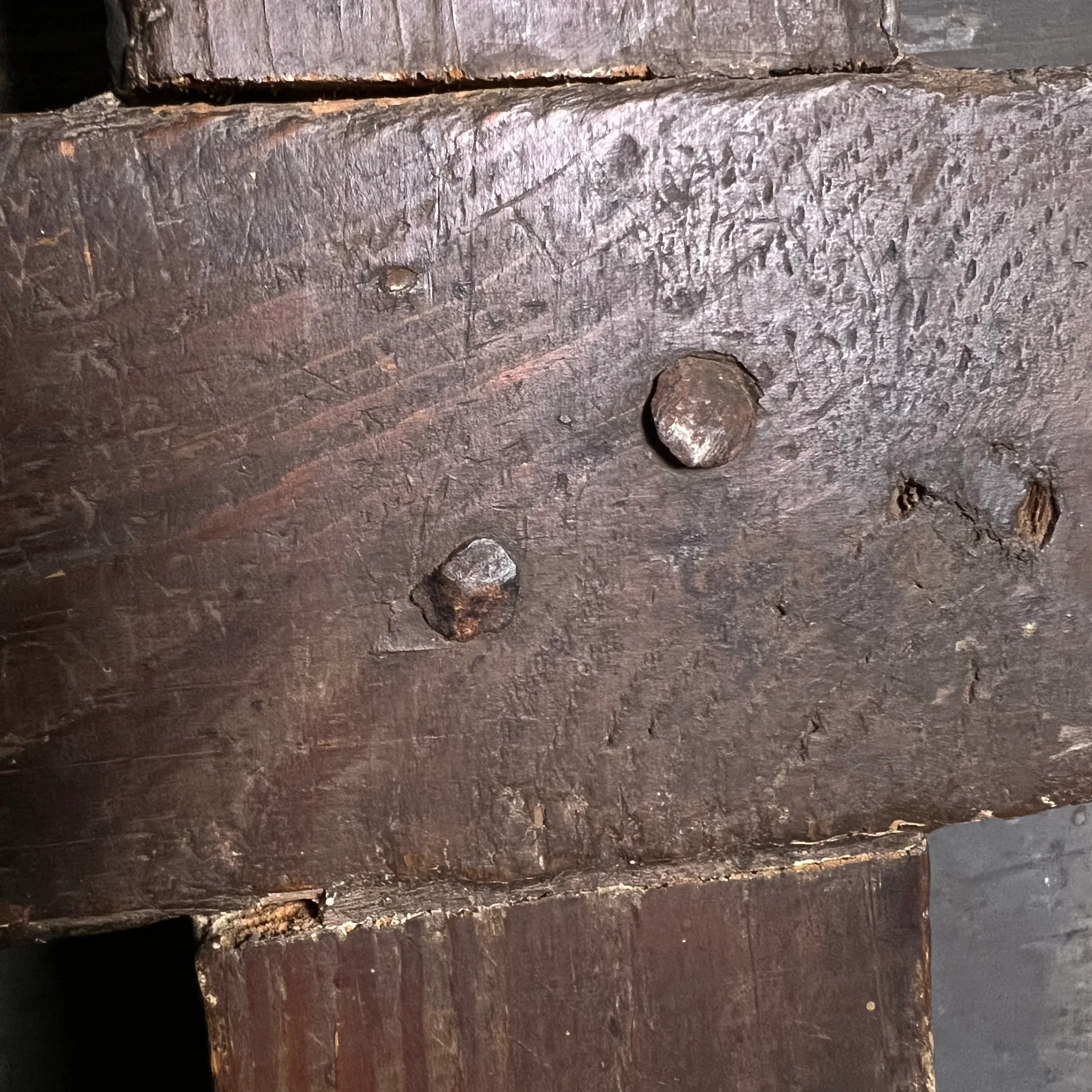
The cross retains its original gesso ground with faint but legible painted symbols of the Four Evangelists at each terminal — the angel, lion, ox, and eagle — a theological program closely tied to liturgical crucifixes of the 12th and early 13th centuries. The reverse is flat and undecorated, consistent with altar or chapel placement. The figure itself shows remarkable surface integrity, including areas of original ground and traces of gesso and pigment.
This crucifix is accompanied by period paperwork referring to it as "The Spencer Crucifixion", and a historic note referencing Holloway’s, Goring-on-Thames, suggesting acquisition through a 20th-century English auction house. While the Spencer name may refer to a prior private collection, this provenance offers insight into its more recent history.
A scarce survivor from the Romanesque liturgical world, this piece exemplifies the sober power and symbolic clarity of early Christian carving — untouched by the emotive realism of the Gothic era that would follow.
More Images
Romanesque Crucifixion – North Italian, c.1180–1230 ("The Spencer Crucifixion")
An exceptional and evocative Romanesque carved wood Crucifixion group, retaining its original broad cross and gesso decoration, likely from Northern Italy (or adjacent Ibero-Italian region) c.1180-1230.
The Corpus Christi is presented in a fully frontal, hieratic pose — arms horizontal, legs rigid, and the body carved with deliberate stylisation. The face is serene and symmetrical, recalling the enduring iconography of the Christus Triumphans tradition, where Christ is depicted not in death or agony, but in divine, eternal stillness. The anatomical modelling is schematic and provincial, yet deeply powerful — a hallmark of early Romanesque devotion.
The cross retains its original gesso ground with faint but legible painted symbols of the Four Evangelists at each terminal — the angel, lion, ox, and eagle — a theological program closely tied to liturgical crucifixes of the 12th and early 13th centuries. The reverse is flat and undecorated, consistent with altar or chapel placement. The figure itself shows remarkable surface integrity, including areas of original ground and traces of gesso and pigment.
This crucifix is accompanied by period paperwork referring to it as "The Spencer Crucifixion", and a historic note referencing Holloway’s, Goring-on-Thames, suggesting acquisition through a 20th-century English auction house. While the Spencer name may refer to a prior private collection, this provenance offers insight into its more recent history.
A scarce survivor from the Romanesque liturgical world, this piece exemplifies the sober power and symbolic clarity of early Christian carving — untouched by the emotive realism of the Gothic era that would follow.
Product Information
Product Information
Shipping & Returns
Shipping & Returns
Description
An exceptional and evocative Romanesque carved wood Crucifixion group, retaining its original broad cross and gesso decoration, likely from Northern Italy (or adjacent Ibero-Italian region) c.1180-1230.
The Corpus Christi is presented in a fully frontal, hieratic pose — arms horizontal, legs rigid, and the body carved with deliberate stylisation. The face is serene and symmetrical, recalling the enduring iconography of the Christus Triumphans tradition, where Christ is depicted not in death or agony, but in divine, eternal stillness. The anatomical modelling is schematic and provincial, yet deeply powerful — a hallmark of early Romanesque devotion.
The cross retains its original gesso ground with faint but legible painted symbols of the Four Evangelists at each terminal — the angel, lion, ox, and eagle — a theological program closely tied to liturgical crucifixes of the 12th and early 13th centuries. The reverse is flat and undecorated, consistent with altar or chapel placement. The figure itself shows remarkable surface integrity, including areas of original ground and traces of gesso and pigment.
This crucifix is accompanied by period paperwork referring to it as "The Spencer Crucifixion", and a historic note referencing Holloway’s, Goring-on-Thames, suggesting acquisition through a 20th-century English auction house. While the Spencer name may refer to a prior private collection, this provenance offers insight into its more recent history.
A scarce survivor from the Romanesque liturgical world, this piece exemplifies the sober power and symbolic clarity of early Christian carving — untouched by the emotive realism of the Gothic era that would follow.